
How Can Southeast Asian Buyers Source Fabric from China? A Procurement Guide for Garment Factories
Published Mar 15, 2026

An introduction to how garment factories in Vietnam, Thailand, and Southeast Asia can source fabric from China, including inquiry information, sample confirmation, MOQ, quality inspection, payment, logistics, and supplier communication.
How Can Southeast Asian Buyers Source Fabric from China? A Procurement Guide for Garment Factories
China is an important fabric sourcing market for garment factories and wholesale fabric buyers in Southeast Asia. Buyers from Vietnam, Thailand, Cambodia, Laos, Myanmar, Malaysia, and other markets frequently source fabric from China because of the wide variety of Chinese textiles, flexible development, mature supply chain, and competitive prices.
However, sourcing fabric from China is not just about asking for a price. Buyers need to confirm fabric parameters, samples, MOQ, quality, payment, production lead time, and shipping method before placing bulk orders.
This article will introduce how Southeast Asian buyers can source fabric from China more efficiently.
!
Why Source Fabric from China?
Many garment factories and buyers choose China because the textile supply chain is relatively complete.
China can supply many types of fabric, for example:
- Cotton fabric
- Polyester fabric
- Knitted fabric
- Woven fabric
- Denim
- Uniform fabric
- Sportswear fabric
- Workwear fabric
- Bag fabric
- Waterproof fabric
- Custom dyed fabric
- Printed fabric
For buyers in Vietnam and Thailand, China is relatively close, making sample and bulk transportation more convenient.
Step 1: First Know What Fabric You Need
Before contacting suppliers, buyers should prepare their requirements clearly.
Important information includes:
- Fabric type
- Material or composition
- GSM weight
- Width
- Color
- Quantity
- End use
- Whether samples are needed
- Target price if available
- Delivery country
- Special finishing requirements
- Quality requirements
For example:
"I need polyester mesh fabric, 150 GSM, 160 cm width, navy blue, for sport T-shirt production. Please provide samples and MOQ per color."
This inquiry is clearer than just asking "Do you have sportswear fabric?"
Step 2: Confirm Fabric Type
Different fabrics suit different products.
For example:
- T-shirts commonly use cotton single jersey or polyester single jersey.
- Sportswear commonly uses polyester mesh, polyester single jersey, or stretch fabric.
- School uniforms commonly use polyester-cotton poplin, twill, or pique.
- Workwear commonly uses polyester-cotton twill, TC twill, or canvas.
- Bags commonly use polyester oxford, canvas, or nylon.
- Dresses commonly use satin, chiffon, rayon, crepe, or polyester women's fabric.
If buyers are unsure what fabric to use, they can tell the supplier the final product type and target market.
Good suppliers can recommend more practical fabric solutions based on the end use.
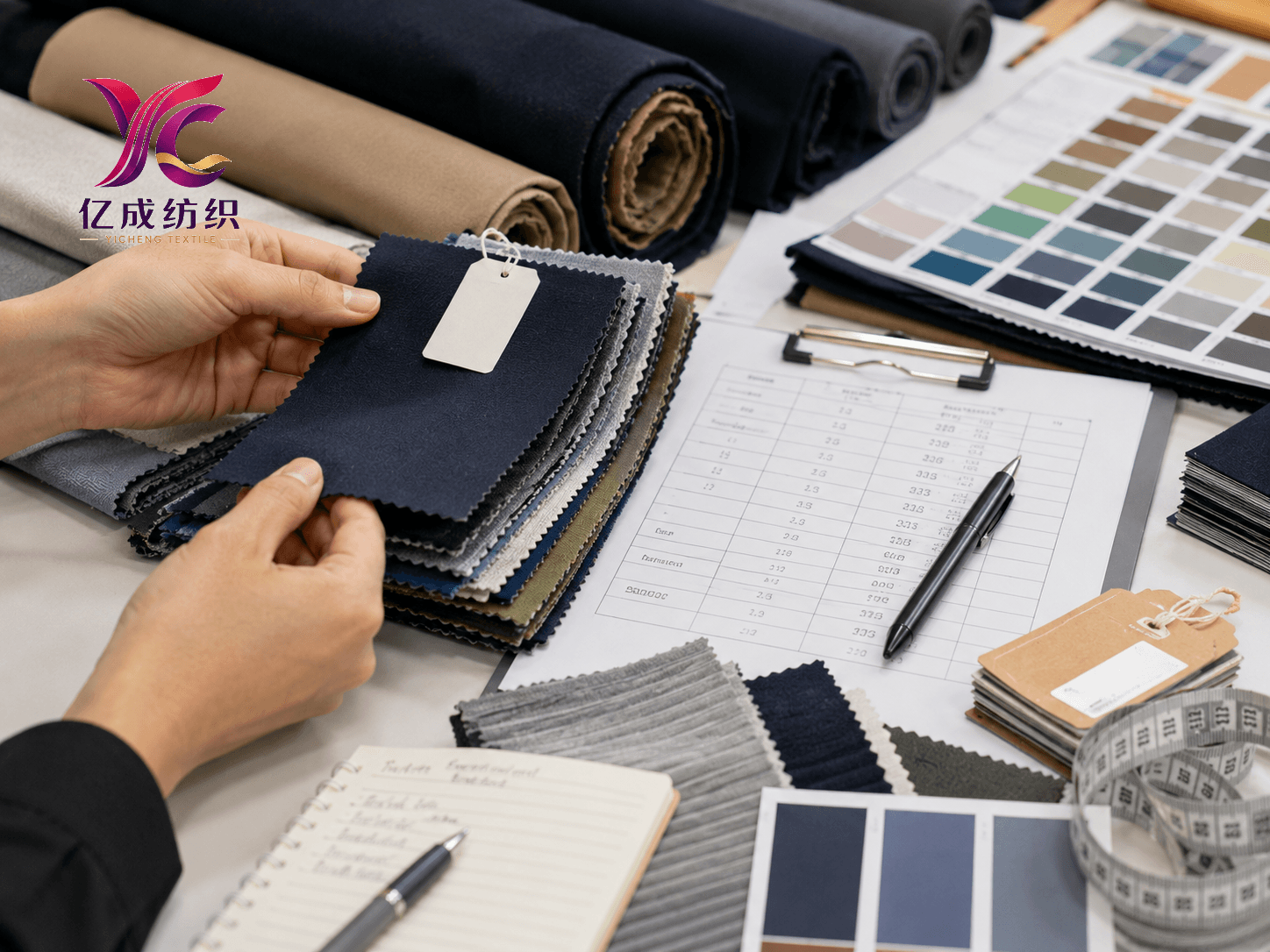
Step 3: Confirm Samples First
Samples are very important before bulk production.
Buyers can request:
- Fabric swatches
- Color cards
- Sample yardage
- Lab dips
- Print samples
- Stock samples
- Custom development samples
Samples help buyers check:
- Hand feel
- GSM
- Width
- Color
- Texture
- Stretch
- Drape
- Shrinkage
- Colorfastness
- Print suitability
For garment factories, it is best to test the fabric before cutting for bulk production.
Step 4: Understand MOQ
MOQ stands for minimum order quantity.
MOQ is affected by these factors:
- Fabric type
- Stock or custom
- Color
- GSM
- Width
- Dyeing requirements
- Printing requirements
- Finishing requirements
Stock fabrics usually have lower MOQ and faster delivery.
Custom fabrics usually have higher MOQ because the supplier may need to arrange yarn, weaving, knitting, dyeing, finishing, or printing.
Buyers should confirm:
- MOQ per color
- MOQ per specification
- MOQ for stock fabrics
- MOQ for custom colors
- MOQ for custom GSM or width
- MOQ for printing
This avoids misunderstandings before production.
Step 5: Compare Prices Correctly
Fabric price should not be based only on price per meter.
Buyers should also confirm:
- Width
- GSM
- Composition
- Color
- Quantity
- Stock or custom
- Finishing
- Packaging
- Payment terms
- Shipping method
- Currency
- Quotation validity
For example, two fabrics are the same price per meter but have different widths. The wider fabric may be more cost-effective during cutting.
Buyers should compare actual fabric cost per garment, not just unit price.
Step 6: Check Quality Before Bulk Production
Quality control is very important when sourcing fabric from China.
Buyers should check:
- GSM
- Width
- Color
- Shrinkage
- Colorfastness
- Hand feel
- Surface defects
- Roll-to-roll shade variation
- Stretch and recovery if needed
- Coating or finishing if needed
- Packaging condition
For repeat orders, buyers should keep approved samples and use the same standards to compare subsequent orders.
If the order is large, buyers can request pre-shipment inspection.
Step 7: Confirm Payment Terms
Payment terms should be confirmed before production.
Common methods may include a deposit before production and balance before shipment, depending on supplier policy and the relationship.
Buyers should confirm:
- Total amount
- Deposit percentage
- Balance payment timing
- Payment currency
- Bank charges
- Invoice or proforma invoice
- Payment receipt
- How to handle quality issues
For new buyers, starting with sample orders or small trial orders can help build trust gradually.
!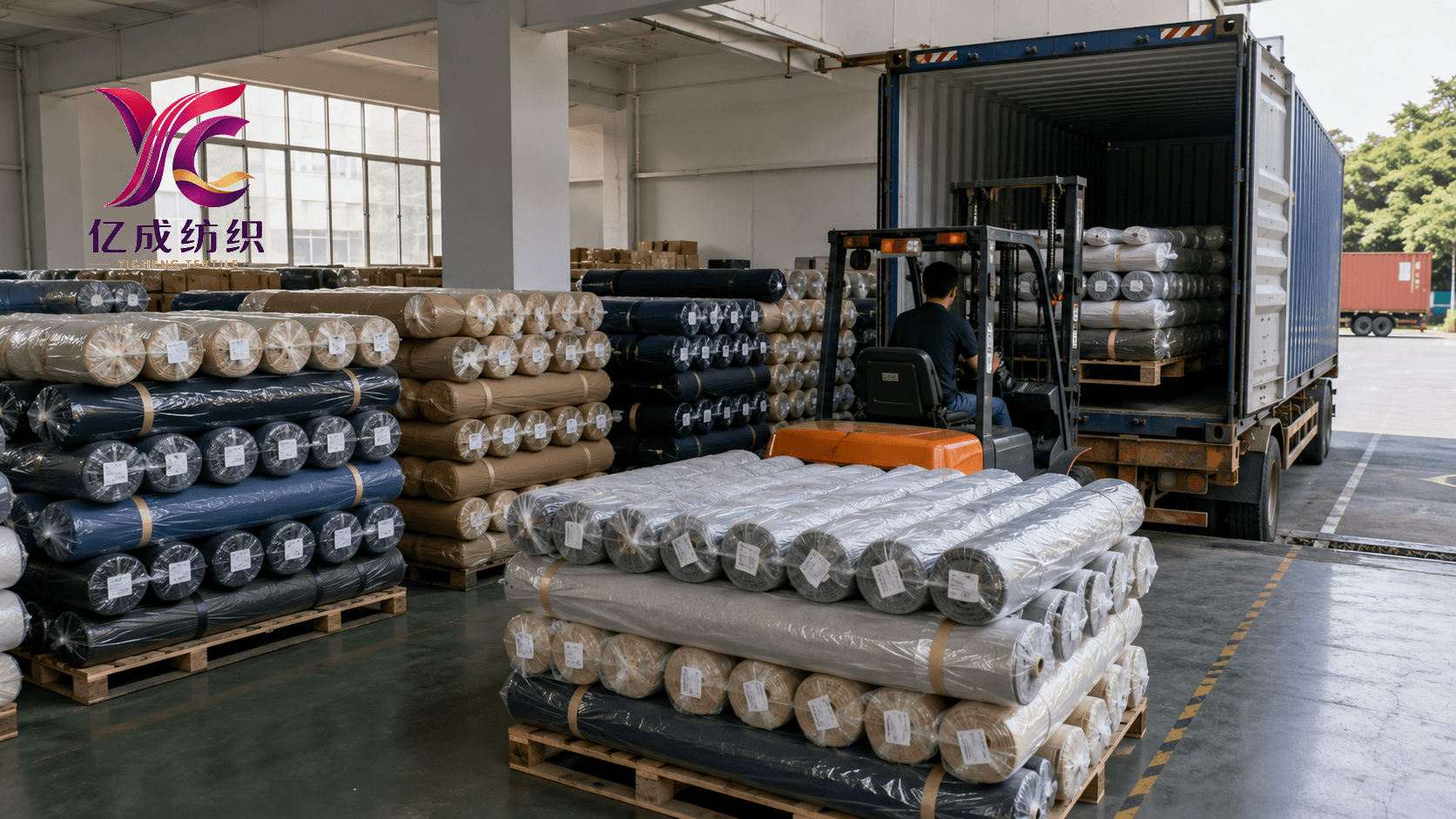
Step 8: Arrange Logistics
Logistics is very important for Southeast Asian buyers.
Common shipping methods include:
- Sample courier
- Urgent air freight
- Bulk sea freight
- Land transport for nearby markets
- Consolidated shipping via freight forwarder
Buyers need to confirm:
- Shipping method
- Transit time
- Packaging method
- Length per roll
- Carton or woven bag packaging
- Gross weight
- Volume
- Destination country
- Customs documents if needed
In bulk orders, logistics costs affect the final landed cost.
Step 9: Communicate Clearly
Clear communication reduces procurement errors.
When buyers communicate with suppliers, it is better to write down key points:
- Fabric specification
- Color
- GSM
- Width
- Quantity
- Price
- MOQ
- Sample status
- Production lead time
- Payment terms
- Packaging
- Shipping method
- Quality standards
Custom orders especially need clear confirmation.
If possible, buyers should provide pictures, reference samples, or specification sheets to reduce misunderstandings.
Common Mistakes
Buyers should avoid these mistakes:
- Only asking for the lowest price
- Not confirming GSM
- Ignoring width
- Not requesting samples
- Not confirming MOQ per color
- Not testing shrinkage
- Not checking colorfastness
- Not confirming stock vs custom
- Not confirming lead time
- Not calculating logistics costs
- Not keeping approved samples
When fabric procurement starts with clear parameters, the process goes much smoother.
Fabric Categories Suitable for Sourcing from China
China can provide many practical fabrics for Southeast Asian buyers.
Common categories include:
T-shirt Fabric
Cotton single jersey, combed cotton single jersey, polyester single jersey, cotton-spandex stretch fabric, and CVC single jersey are very common.
Sportswear Fabric
Polyester mesh, polyester single jersey, quick-dry fabric, nylon-spandex stretch fabric, and polyester-spandex stretch fabric are common choices.
Uniform Fabric
Polyester-cotton poplin, twill, pique, and uniform woven fabric are suitable for school uniforms and work uniforms.
Workwear Fabric
Polyester-cotton twill, TC twill, canvas, and ripstop fabric are common workwear choices.
Bag Fabric
Polyester oxford, canvas, nylon, and coated fabric are commonly used for bags and backpacks.
Women's Fabric
Satin, chiffon, rayon, polyester crepe, and printed fabric are commonly used for women's fashion.
Why is Guangzhou Important for Fabric Sourcing?
Guangzhou is one of the key textile sourcing areas in China.
Buyers can find many fabric categories, accessory resources, sample development resources, and garment supply chain support in and around the Guangzhou textile market.
For overseas buyers, working with suppliers familiar with Guangzhou fabric resources can improve selection and sampling efficiency.
Sourcing Tips for Vietnamese Buyers
Vietnamese garment factories usually need stable fabric supply for export orders and local production.
Tips:
- Prepare accurate parameters before inquiry.
- Confirm samples before bulk production.
- Check shrinkage and colorfastness.
- Confirm MOQ per color.
- Compare width and GSM, not just price.
- Arrange shipping time in advance.
- Keep approved samples for repeat orders.
Vietnamese buyers can focus on T-shirt fabric, sportswear fabric, uniform fabric, denim, polyester fabric, and workwear fabric.
Sourcing Tips for Thai Buyers
Thai buyers often need fabric for uniforms, sportswear, women's wear, bags, and local wholesale markets.
Tips:
- Prioritize breathable fabrics for hot weather.
- Check colorfastness to perspiration and washing.
- First ask about stock colors to lower MOQ.
- Test samples before bulk production.
- Confirm suitability for printing or embroidery.
- Calculate logistics costs before ordering.
- Communicate with clear product images or reference samples.
Thai buyers can focus on polyester fabric, cotton fabric, women's fabric, sportswear fabric, school uniform fabric, and bag fabric.
Buyer Inquiry Template
A professional inquiry can include:
Fabric type:
Material:
Weight (GSM):
Width:
Color:
Quantity:
End use:
Sample fabric needed:
Special finishing:
Delivery country:
Target price:
Example:
Fabric type: Polyester-cotton twill
Material: 65% polyester, 35% cotton
Weight (GSM): 240 GSM
Width: 150 cm
Color: Navy blue and grey
Quantity: 1000 meters per color
End use: Factory uniforms
Sample fabric needed: Yes
Delivery country: Vietnam
This way, suppliers can reply faster and more accurately.
Summary
Sourcing fabric from China is a practical choice for Southeast Asian buyers, but the key to success lies in clear parameters, sample confirmation, understanding MOQ, quality inspection, clear payment terms, and advance logistics planning.
For garment factories and wholesale buyers in Vietnam, Thailand, and Southeast Asia, the best approach is to communicate clearly with suppliers and confirm samples before bulk production.
If you are looking for cotton fabric, polyester fabric, knitted fabric, woven fabric, denim, sportswear fabric, uniform fabric, workwear fabric, or bag fabric from China, you can send your requirements directly. We can recommend suitable fabric solutions and assist with the procurement process.
Frequently Asked Questions
Can Southeast Asian buyers source fabric from China?
Yes. Many Vietnamese, Thai, and Southeast Asian buyers source fabric from China for garment, uniform, sportswear, and bag production.
What information is needed when inquiring about fabric?
It is recommended to provide fabric type, material, GSM, width, color, quantity, end use, sample requirements, and delivery country.
Which is better: stock fabric or custom fabric?
Stock fabric has lower MOQ and faster delivery. Custom fabric is suitable for orders requiring specific colors, GSM, width, or finishing.
Do I need to confirm samples before bulk production?
Yes. Samples help buyers check hand feel, GSM, color, width, shrinkage, colorfastness, and production suitability.
What common fabrics can be sourced from China?
Common ones include cotton fabric, polyester fabric, knitted fabric, woven fabric, denim, sportswear fabric, uniform fabric, workwear fabric, and bag fabric.


