
What Fabric Is Used for Workwear and Factory Uniforms? Workwear Fabric Sourcing Guide
Published Dec 15, 2025

A guide for factories, garment manufacturers, and fabric wholesale buyers on selecting fabrics for workwear and industrial uniforms, including polyester-cotton twill, canvas, ripstop, GSM, abrasion resistance, shrinkage, colorfastness, and comfort.
What Fabric Is Used for Workwear and Factory Uniforms? Workwear Fabric Sourcing Guide
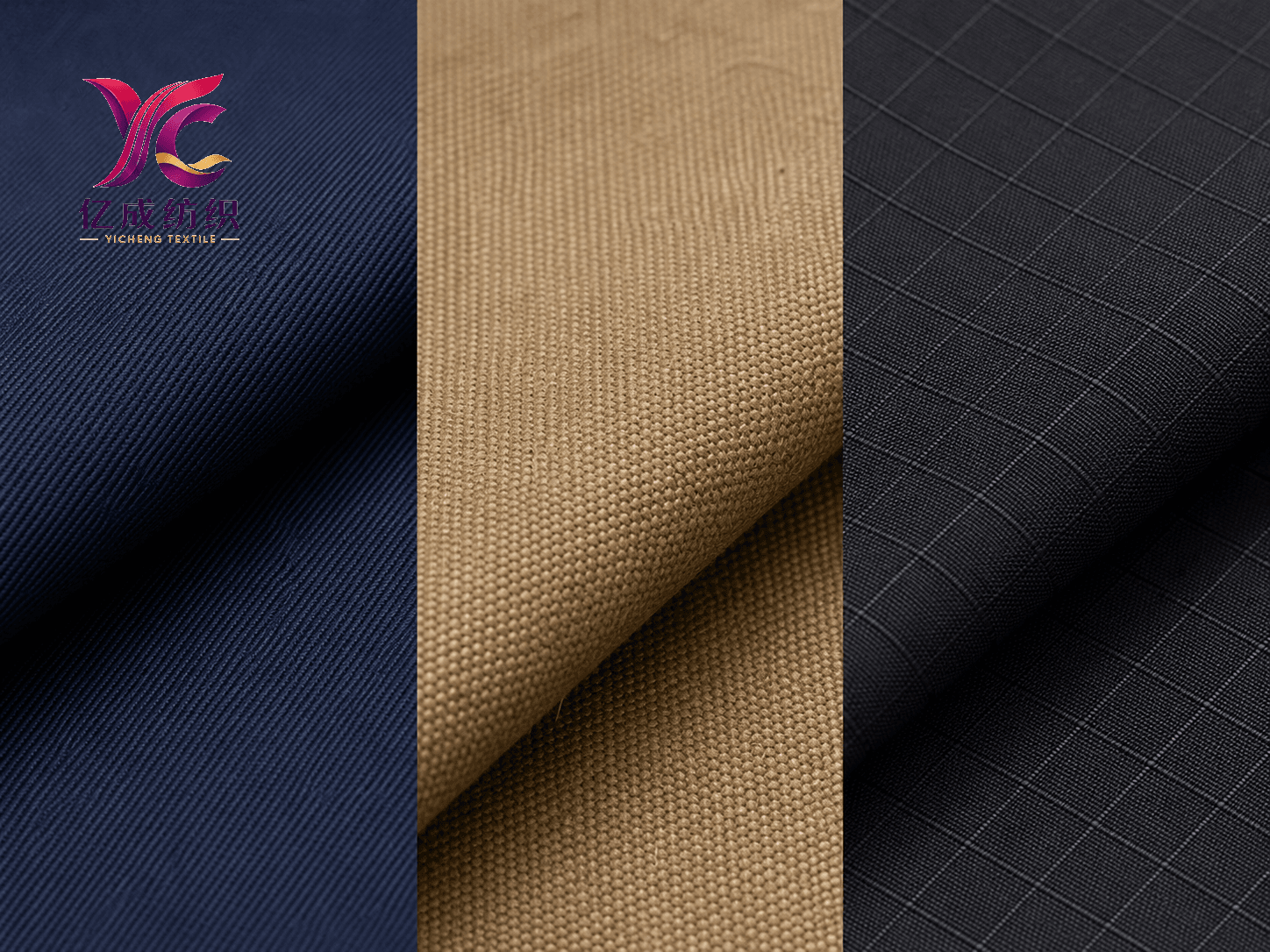
Workwear and factory uniforms are commonly used in factories, warehouses, construction sites, repair workshops, logistics companies, equipment maintenance teams, and various daily work scenarios. Compared to ordinary fashion, workwear fabrics need to be more durable, color-stable, easy to care for, and suitable for long hours of wear.
For garment manufacturers and fabric wholesale buyers, choosing the right workwear fabric can reduce quality issues, extend the life of finished garments, and help customers control long-term uniform costs.
This article introduces how to select fabrics for workwear and factory uniforms, including polyester-cotton twill, TC twill, canvas, ripstop fabric, GSM, shrinkage, colorfastness, abrasion resistance, and bulk procurement considerations.
!
Why Is Choosing the Right Workwear Fabric Important?
Workwear is typically worn for long hours and washed repeatedly. In many work environments, uniforms must withstand friction, movement, dust, sweat, and industrial laundering.
Choosing the wrong fabric can lead to:
- Easy tearing
- Poor abrasion resistance
- Fading after washing
- High shrinkage
- Insufficient seam strength
- Poor breathability
- Easy wrinkling
- Pilling
- Uncomfortable hand feel
- Short garment life
- Customer complaints
For industrial uniform orders, fabric is not just about price—it affects safety, comfort, durability, and overall employee image.
What Makes a Good Workwear Fabric?
Good workwear fabric typically needs:
- Good durability
- Stable colorfastness
- Low shrinkage
- Appropriate GSM
- Comfortable hand feel
- Good breathability
- Good sewing performance
- Good abrasion resistance
- Good tear resistance
- Easy care
- Suitable for long-term repeat orders
- Reasonable cost
Different industries have different requirements for workwear fabrics. Light factory shirts, mechanic jackets, and construction pants should not use exactly the same fabric.
Polyester-Cotton Twill
Polyester-cotton twill is one of the most common fabrics for workwear and factory uniforms.
It is a blend of polyester and cotton. Polyester enhances durability, wrinkle resistance, and easy care; cotton improves comfort and breathability.
Common uses:
- Factory uniforms
- Work shirts
- Work pants
- Industrial uniforms
- Warehouse uniforms
- Maintenance uniforms
- Mechanic uniforms
Common blend ratios:
- 65% polyester 35% cotton
- 80% polyester 20% cotton
- 60% cotton 40% polyester
- Other custom polyester-cotton ratios
Before bulk production, buyers should check composition, GSM, width, shrinkage, colorfastness, and hand feel.
TC Twill
TC twill usually refers to polyester-cotton twill fabric with a high polyester content.
When buyers need better durability, lower shrinkage, easier washing, and better cost control, TC twill is practical.
TC twill is suitable for:
- Factory uniforms
- Work pants
- Uniform shirts
- Technician uniforms
- Warehouse workwear
- Economy workwear orders
Buyers should check if the hand feel is suitable for the target market climate. Fabrics with very high polyester content may be more durable but less breathable in hot weather compared to higher cotton content fabrics.
Cotton Twill
Cotton twill has a more natural hand feel than high-polyester fabrics and is generally more breathable.
It suits buyers who want more comfort and a cotton-like feel.
Common uses:
- Work shirts
- Casual workwear
- Aprons
- Multi-purpose uniforms
- Light industrial uniforms
However, cotton twill may shrink more and wrinkle more easily than polyester-cotton blends, so buyers should carefully check shrinkage and easy-care performance.
Canvas Workwear Fabric
Canvas is a sturdy woven fabric, commonly used for heavier workwear and tool-related products.
It can be used for:
- Heavy-duty work pants
- Aprons
- Tool vests
- Protective outerwear
- Workshop uniforms
- Tool bags
- Reinforced panel areas
Canvas offers strong structure and durability but may be heavier and less soft.
Buyers should check GSM, hand feel, shrinkage, colorfastness, sewing performance, and post-wash condition.
Ripstop Fabric
Ripstop fabric has a reinforced grid structure on the surface, designed to reduce tear propagation.
It suits workwear that needs better tear resistance without adding too much weight.
Common uses:
- Outdoor workwear
- Multi-purpose uniforms
- Field uniforms
- Work pants
- Work jackets
- Industrial uniforms
Buyers should check the grid structure, tear strength, GSM, whether there is a coating, and colorfastness.
Oxford Fabric and Coated Fabric
Oxford fabric and coated fabric can be used for some outer workwear, tool bags, protective covers, and outdoor work uniforms.
They may offer better structure, water repellency, or abrasion resistance.
Common uses:
- Work jackets
- Outdoor uniforms
- Tool bags
- Raincoat-style workwear
- Protective panel areas
Buyers should confirm whether the fabric needs water repellency, coating, breathability, or special finishing.
How to Choose the Right GSM?
GSM affects fabric weight, thickness, durability, comfort, and cost.
Common workwear fabric GSM references:
- 120–160 GSM: Light work shirts and indoor uniforms
- 160–220 GSM: Medium work shirts and light work pants
- 220–280 GSM: Standard workwear twill, work pants, and uniforms
- 280–350 GSM: Heavier work pants, jackets, and durable uniforms
- Over 350 GSM: Heavy-duty canvas or special workwear
The appropriate GSM depends on product type, climate, durability requirements, and target price.
For hot and humid markets, medium-weight fabrics with good breathability are suitable. Heavy-duty workwear may require thicker, stronger fabrics.
Durability and Abrasion Resistance
Workwear fabric must withstand daily activity and friction.
Buyers should check:
- Abrasion resistance
- Tear strength
- Seam strength
- Pilling resistance
- Fabric stability
- Washing durability
- Strength after long-term use
Work pants, mechanic uniforms, warehouse uniforms, and construction workwear especially need attention to durability.
If fabric wears out quickly, even if the initial price is low, the long-term cost may be higher.
Shrinkage Control
Shrinkage affects garment size after washing.
Buyers should test:
- Lengthwise shrinkage
- Widthwise shrinkage
- Shrinkage after washing
- Changes after drying
- If needed, changes after ironing or industrial washing
Workwear is frequently washed, so stable shrinkage is important.
Before bulk production, garment factories should test fabric shrinkage and adjust patterns as needed.
Colorfastness
Common colors for workwear include navy, black, gray, khaki, dark green, royal blue, etc.
Because uniforms require frequent washing, colorfastness is very important.
Buyers should check:
- Wash colorfastness
- Rub colorfastness
- Perspiration colorfastness
- Lightfastness if used outdoors
- Shade variation between rolls
- Color consistency for repeat orders
If fabric fades quickly, uniforms will look worn after some time.
Comfort and Breathability
Workers may wear uniforms for 8 hours or more daily, so comfort is important.
Buyers should consider:
- Climate
- Fabric thickness
- Fiber composition
- Breathability
- Comfort when sweating
- Hand feel
- Season
- Indoor vs. outdoor use
For Vietnam, Thailand, and Southeast Asian markets, hot and humid weather is common, so medium-weight fabrics with good breathability are usually practical.
Blends with higher cotton content are generally more comfortable; blends with higher polyester content are generally more durable and easier to care for.
Wrinkle Resistance and Easy Care
Workwear should be easy to wash and maintain.
Many buyers prefer these features:
- Easy to wash
- Quick drying
- Not easily wrinkled
- Easy to iron
- Stable after repeated washing
- Durable for daily use
Polyester-cotton blends are popular because they balance durability, comfort, and easy-care performance.
For factory uniforms and service uniforms, a neat appearance is also important.
Special Finishes for Workwear
Some workwear fabrics may need special finishes depending on the end use.
Common finishes include:
- Water-repellent finish
- Antistatic finish
- Flame-retardant finish
- Oil-repellent finish
- Stain-resistant finish
- Softening finish
- Brushed finish
- Coated finish
For safety protective workwear, buyers must first confirm the standards required by the client or target market. Special protective workwear should use certified fabrics that meet requirements.
Do not use ordinary twill fabric as a substitute for certified protective fabric.
!
Reflective Tape and Logo Techniques
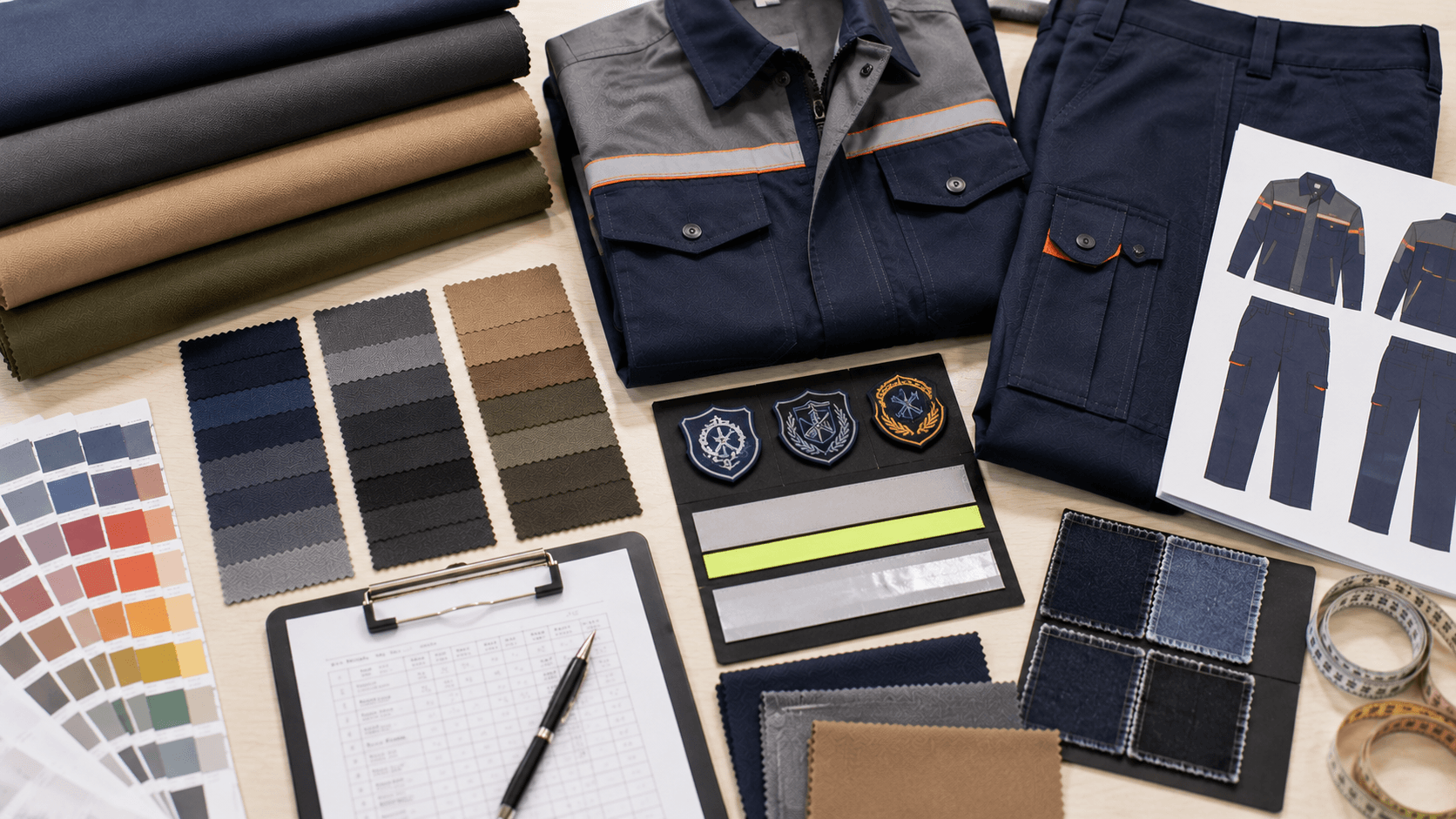
Many workwear requires reflective tape, embroidery, logo printing, or name labels.
Before selecting fabric, buyers should confirm:
- Suitability for embroidery
- Suitability for heat transfer
- Suitability for screen printing
- Suitability for reflective tape heat pressing or sewing
- Logo placement
- Fabric stability
- Washing durability after decoration techniques
The fabric surface must stably support the corresponding logo or reflective technique.
How to Choose Fabric for Different Workwear?
Factory Uniform Shirts
Can choose polyester-cotton poplin, polyester-cotton twill, or lightweight uniform fabric.
Focus on comfort, breathability, and easy care.
Work Pants
Can choose polyester-cotton twill, TC twill, canvas, or ripstop fabric.
Durability, tear strength, and colorfastness are important.
Mechanic Uniforms
Mechanic uniforms need to be durable with stable washing performance.
Polyester-cotton twill or heavier TC twill is practical.
Construction Workwear
Construction workwear may need stronger fabric, abrasion resistance, and compatibility with reflective tape.
Depending on the actual work environment, certified protective fabric may also be required.
Warehouse Uniforms
Warehouse uniforms need comfort, durability, and ease of movement.
Medium-weight polyester-cotton twill or uniform fabric can be considered.
Outdoor Workwear
Outdoor workwear may need water repellency, UV resistance, tear resistance, or special finishes.
Depending on requirements, consider oxford fabric, ripstop fabric, coated fabric, or durable twill.
Workwear Fabric Advice for Buyers in Vietnam and Thailand
Vietnam, Thailand, and Southeast Asian markets usually need workwear fabrics suitable for hot and humid climates.
Suggestions:
- Breathability
- Stable colorfastness
- Low shrinkage
- Medium-weight durability
- Easy-care performance
- Good sewing performance
- Flexible MOQ
- Suitable for long-term repeat orders
- Reasonable price for bulk uniforms
For factory uniforms, polyester-cotton twill is a priority. For work pants, TC twill or heavier polyester-cotton twill is a good choice. For outdoor workwear, consider ripstop or coated fabric.
What Information Should Buyers Provide?
To help suppliers recommend fabrics accurately, buyers should provide:
- Workwear product type
- Known fabric type
- Material or composition
- GSM weight
- Width
- Color
- Quantity
- Durability requirements
- Shrinkage requirements
- Colorfastness requirements
- Logo or reflective tape requirements
- Special finish requirements
- Whether samples are needed
- Destination country
- If available, target price
For example:
"I need polyester-cotton twill for factory uniforms, 240 GSM, navy and gray, 150 cm width. Please provide samples, MOQ per color, and shrinkage information."
The clearer the information, the easier for suppliers to quickly recommend suitable fabrics.
Common Mistakes
Buyers should avoid these mistakes:
- Choosing fabric only by price
- Ignoring durability
- Not testing shrinkage
- Not checking colorfastness
- Choosing too thick fabric for hot climates
- Choosing too thin fabric for heavy-duty workwear
- Not checking sewing performance
- Assuming ordinary fabric can replace certified protective fabric
- Not requesting physical samples
- Not confirming color standards for repeat orders
- Not confirming MOQ per color
Workwear fabric must match the work environment, garment type, and durability requirements.
Summary
When selecting fabric for workwear and factory uniforms, focus on durability, GSM, shrinkage, colorfastness, comfort, breathability, easy care, sewing performance, and long-term repeat order stability.
For garment manufacturers and fabric wholesale buyers, the right fabric makes uniforms more comfortable, durable, and cost-effective in the long run.
If you are looking for polyester-cotton twill, TC twill, canvas workwear fabric, ripstop fabric, uniform fabric, or durable industrial fabric, feel free to send an inquiry. We can recommend suitable workwear fabric solutions for buyers in Vietnam, Thailand, and Southeast Asia.
Frequently Asked Questions
What fabric is commonly used for workwear?
Polyester-cotton twill, TC twill, cotton twill, canvas, and ripstop fabric are common workwear fabrics, depending on the application.
What is polyester-cotton twill suitable for?
Polyester-cotton twill is commonly used for factory uniforms, work shirts, work pants, industrial uniforms, and warehouse uniforms.
What GSM is suitable for workwear fabric?
Standard workwear fabric is commonly 220–280 GSM. Heavier work pants and jackets can be 280–350 GSM, depending on product requirements.
Is canvas suitable for workwear?
Yes. Canvas is strong and durable, suitable for heavy-duty work pants, aprons, tool vests, and reinforced panel areas.
Should workwear fabric be tested before bulk production?
Yes. Buyers should check shrinkage, colorfastness, durability, hand feel, sewing performance, and special finish effects before bulk production.


