
How to Choose Fabric for T-Shirt Production? A Procurement Guide for Garment Factories
Published Jun 15, 2024

Introduces how garment factories and fabric wholesale buyers can choose t-shirt fabrics, including cotton single jersey, polyester single jersey, cotton-spandex stretch fabric, GSM weight, fabric width, shrinkage, color fastness, and MOQ.
How to Choose Fabric for T-Shirt Production? A Procurement Guide for Garment Factories
T-shirts are very common products in the global apparel market, often used for casual wear, uniforms, promotional wear, sportswear, school uniforms, branded apparel, and daily fashion.
For garment factories and fabric wholesale buyers, choosing the right t-shirt fabric is very important. The fabric affects wearing comfort, hand feel, shrinkage, print effect, durability, price, and end-customer satisfaction.
This article introduces how to choose fabric for t-shirt production, including fabric types, GSM weight, width, composition, shrinkage, color fastness, MOQ, and sample approval.
Why is T-Shirt Fabric Selection Important?
T-shirts may seem simple, but fabric selection directly impacts the product outcome.
Wrong fabric choice can lead to:
- Poor hand feel
- High shrinkage
- Skewing after washing
- Color fading
- Poor print quality
- Poor stretch recovery
- Insufficient durability
- Customer complaints
- Unstable garment dimensions
For garment factories, the right fabric can improve production efficiency and reduce after-sales issues.
Before bulk order placement, buyers should confirm fabric type, GSM, width, color, composition, and quality requirements.
!
Common T-Shirt Fabric Types
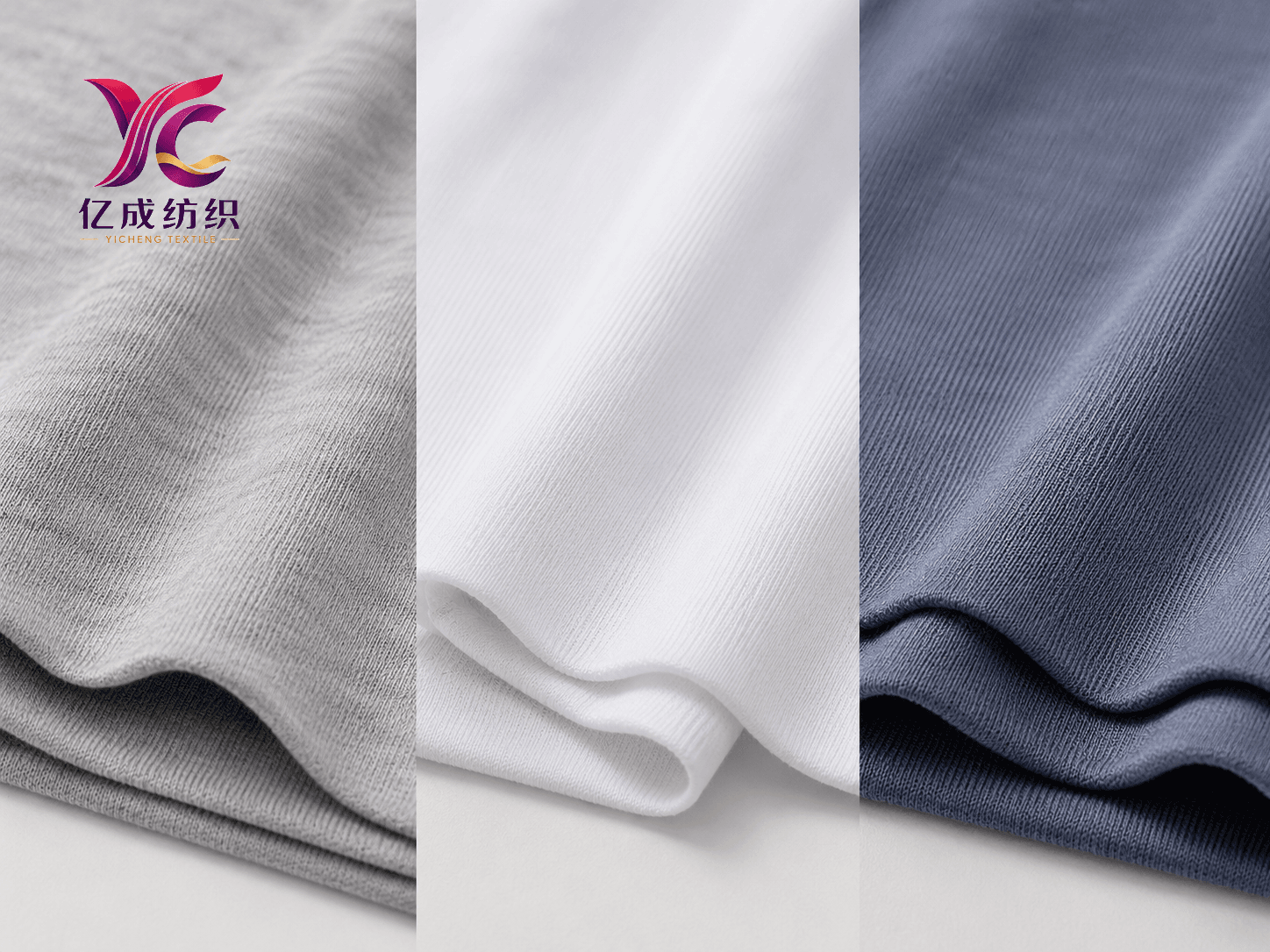
T-shirt fabrics typically belong to knitted fabrics, with single jersey being the most common. However, depending on the target market and product style, there are many different options.
Cotton Single Jersey
Cotton single jersey is one of the most common fabrics for t-shirts.
It is soft, breathable, and comfortable against the skin, widely used for casual t-shirts, branded t-shirts, children's t-shirts, and everyday clothing.
Buyers need to pay attention to:
- Cotton yarn quality
- GSM weight
- Fabric width
- Shrinkage
- Hand feel
- Color fastness
- Fabric surface evenness
If the product focuses on comfort, cotton single jersey is a common choice.
Combed Cotton Single Jersey
Combed cotton single jersey usually feels smoother and has a cleaner surface than regular cotton single jersey.
It suits higher-quality t-shirts, branded apparel, and products with higher hand feel requirements.
Compared to regular cotton, combed cotton has fewer impurities and usually offers better fabric surface quality.
Cotton-Spandex Stretch Single Jersey
Cotton-spandex stretch single jersey incorporates spandex for better elasticity and recovery.
It suits:
- Fitted t-shirts
- Women's t-shirts
- Children's wear
- Stretch casual wear
- Comfortable daily clothing
Buyers need to check both stretch and recovery. Good stretch fabric should recover well after stretching.
Polyester Single Jersey
Polyester single jersey is often used for sports t-shirts, training shirts, promotional wear, and sublimation printed products.
It can be made lightweight, quick-drying, and suitable for vibrant prints.
Buyers need to pay attention to:
- Breathability
- Print performance
- Color fastness
- Hand feel
- GSM weight
- Moisture-wicking properties if required
Polyester single jersey suits sportswear and quick-dry t-shirts.
Polyester Mesh Fabric
Polyester mesh fabric is often used for sportswear and breathable t-shirts.
It offers good breathability, suitable for hot climates, team uniforms, training wear, and athleisure wear.
For Vietnam, Thailand, and Southeast Asian markets, breathable polyester mesh is practical for sportswear and promotional wear.
CVC and T/C Fabrics
CVC and T/C are cotton-polyester blended fabrics.
They combine some comfort of cotton with the durability and cost advantage of polyester.
Common uses include:
- School uniform t-shirts
- Uniform t-shirts
- Promotional wear
- Workwear t-shirts
- Cost-controlled t-shirts
Buyers need to confirm the specific composition ratio, such as higher cotton content or higher polyester content.
How to Choose the Right GSM Weight?
GSM is a very important parameter in t-shirt fabric sourcing.
Common t-shirt fabric weight ranges include:
- 120–150 GSM: Lightweight summer t-shirts
- 150–180 GSM: Standard lightweight t-shirts
- 180–220 GSM: Regular quality t-shirts
- 220–260 GSM: Heavier high-quality t-shirts
- Above 260 GSM: Heavyweight t-shirts or special styles
Higher GSM is not always better. The appropriate weight depends on the target market, season, price range, and style.
For hot markets, buyers may prefer breathable fabrics around 160–200 GSM. For high-quality t-shirts, 200–240 GSM can be chosen based on feel and fit.
Fabric Width and Fabric Consumption
Fabric width affects cutting efficiency and fabric consumption.
Common t-shirt fabric widths include:
- 160 cm
- 170 cm
- 180 cm
- Tubular width
- Open width
For garment factories, the width must be confirmed before pattern making and cutting.
Some patterns can reduce waste with wider fabrics, but it also depends on garment sizes and layout.
Buyers should not compare prices only by per meter cost, because width affects the actual garment cost.
Shrinkage Control
Shrinkage is very important for t-shirt production.
If t-shirt fabric shrinks excessively after washing, the garment size will become smaller and may not meet size requirements.
Buyers need to check:
- Lengthwise shrinkage
- Widthwise shrinkage
- Shrinkage after washing
- Change after drying
- If needed, change after steaming
Cotton single jersey, cotton-spandex stretch fabric, and knitted fabrics should be thoroughly tested for shrinkage before bulk cutting.
If shrinkage is known, garment factories may need to adjust patterns before production.
Color Fastness
T-shirts are frequently worn and washed, so color fastness is important.
Buyers need to check:
- Washing fastness
- Rubbing fastness
- Perspiration fastness
- Staining tendency
- Shade variation between rolls
Dark colors like black, navy, and deep red require special attention.
Sports t-shirts and summer t-shirts often contact sweat, so perspiration fastness is also important.
Hand Feel and Fabric Surface Quality
Hand feel is an important selling point for t-shirts.
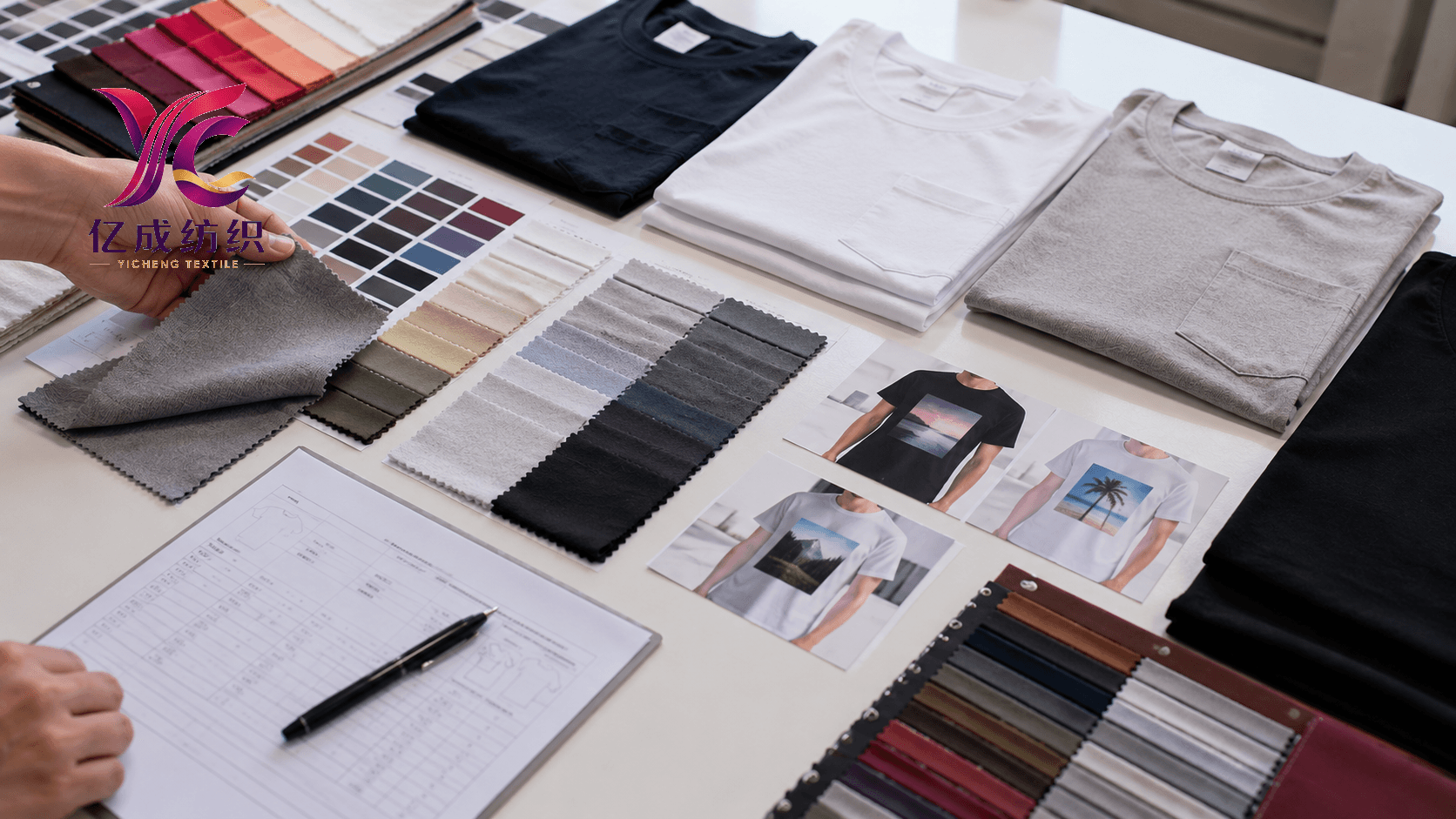
Buyers should compare bulk fabric with approved samples, checking:
- Softness
- Smoothness
- Thickness
- Stretch
- Fabric surface cleanliness
- Pilling risk
- Drape
- Comfort against skin
Branded t-shirts and children's t-shirts especially need attention to hand feel.
If the fabric is rough, too stiff, or too thin, the finished product may not meet customer expectations.
Printing and Embroidery Requirements
Many t-shirts require printing or embroidery.
Before selecting fabric, buyers need to confirm the decoration method, such as:
- Screen printing
- Digital printing
- Sublimation printing
- Heat transfer
- Embroidery
- Label printing
Cotton single jersey is commonly used for screen printing, while polyester single jersey is commonly used for sublimation printing.
The fabric surface must be suitable for the chosen printing method. If the surface is poor, it may affect print clarity and fastness.
Stretch and Recovery
If the t-shirt is fitted or contains spandex, buyers need to check stretch and recovery.
Key points include:
- Stretch percentage
- Recovery after stretching
- Dimensional stability after washing
- Comfort during movement
- Spandex content
- Elasticity after repeated wear
Fabrics with poor recovery tend to loosen and deform over time.
Women's t-shirts, children's wear, and fitted styles especially need attention to recovery.
Quality Checks Before Bulk Production
Before bulk t-shirt production, buyers should check:
- Approved sample
- GSM weight
- Fabric width
- Color
- Shrinkage
- Color fastness
- Hand feel
- Stretch and recovery
- Fabric defects
- Roll-to-roll consistency
- Packaging condition
Fabric issues are best found before cutting. Once fabric is cut and sewn, addressing quality problems becomes more difficult.
MOQ and Stock Fabrics
MOQ for t-shirt fabric depends on whether it is stock or customized.
Stock fabrics usually have lower MOQ and faster delivery.
Customized fabrics may involve:
- Custom color
- Custom GSM
- Custom width
- Custom composition
- Special finishing
- Printing requirements
Customized t-shirt fabrics typically have higher MOQ and longer lead times.
If buyers are just testing a new market, stock fabrics are more suitable as a starting choice. For buyers with stable orders, customized fabrics are better for long-term production.
How to Choose Fabric for Different T-Shirts?
Basic Casual T-Shirts
Commonly use cotton single jersey or CVC single jersey. Buyers need to balance comfort, price, and shrinkage.
High-Quality Branded T-Shirts
Options include combed cotton single jersey, higher GSM cotton single jersey, or cotton-spandex stretch single jersey.
Hand feel, fabric surface quality, and shrinkage control are very important.
Sports T-Shirts
Commonly use polyester single jersey, polyester mesh, or polyester-spandex stretch fabric.
Breathability, quick-dry performance, color fastness, and print effect need key attention.
!
Uniform T-Shirts
Options include CVC, T/C, polyester-cotton single jersey, or pique fabric.
Durability, washing performance, and color stability are more important.
Promotional T-Shirts
Promotional t-shirts usually focus more on cost control and stable supply.
Stock cotton single jersey, polyester single jersey, or blended fabrics are practical choices.
T-Shirt Fabric Recommendations for Vietnam and Thailand Markets
Vietnam, Thailand, and Southeast Asian markets are typically hot and humid.
T-shirt fabrics for these markets need more attention to:
- Breathability
- Comfortable hand feel
- Stable color fastness
- Low shrinkage
- Appropriate GSM
- Quick-dry performance for sportswear
- Flexible MOQ for trial orders
Cotton single jersey suits casual t-shirts, while polyester mesh and polyester single jersey suit sportswear and promotional wear.
What Information Should Buyers Provide?
For suppliers to quote accurately, buyers should provide:
- Fabric type
- Material or composition
- GSM weight
- Fabric width
- Color
- Quantity
- T-shirt type
- Printing requirements
- Shrinkage requirements
- Color fastness requirements
- Whether samples are needed
- Delivery country
Example:
"I need cotton single jersey, 180 GSM, 180 cm open width, in black and white, for t-shirt production. Please provide samples and MOQ per color."
The clearer the information, the easier it is for suppliers to recommend suitable fabric and provide a faster quote.
Common Mistakes
Buyers should avoid these mistakes:
- Selecting fabric only by price
- Not confirming GSM
- Ignoring fabric width
- Not testing shrinkage
- Not checking color fastness
- Not confirming suitability for printing
- Ignoring hand feel
- Not checking stretch recovery
- Not requesting samples
- Not confirming MOQ per color
Good t-shirt fabric should match both product quality and production cost.
Summary
Choosing fabric for t-shirt production is not just about cotton or polyester. Buyers need to comprehensively consider fabric type, GSM, width, composition, shrinkage, color fastness, hand feel, printing requirements, MOQ, and quality control.
For garment factories and wholesale buyers, the right t-shirt fabric can improve comfort, reduce production risks, and increase customer satisfaction.
If you are looking for cotton single jersey, combed cotton single jersey, cotton-spandex stretch fabric, polyester single jersey, polyester mesh, or blended t-shirt fabrics, feel free to send an inquiry. We can recommend suitable t-shirt fabric solutions for garment factories in Vietnam, Thailand, and Southeast Asia.
FAQ
What fabric is commonly used for t-shirts?
Casual t-shirts often use cotton single jersey, while sports t-shirts often use polyester single jersey or polyester mesh.
What GSM is suitable for t-shirt fabric?
Common t-shirt fabrics are around 160–220 GSM. Lightweight summer t-shirts can be lower, and high-quality t-shirts can be higher.
Is cotton single jersey suitable for t-shirts?
Yes. Cotton single jersey is soft, breathable, and comfortable, and is a very common fabric for t-shirts.
Is polyester fabric suitable for sports t-shirts?
Yes. Polyester single jersey and polyester mesh are often used for sports t-shirts because they can be lightweight, breathable, and quick-drying.
Do I need to test shrinkage before bulk production?
Yes. Testing shrinkage before cutting can prevent the problem of garment size reduction after washing.


