
What Fabric for Dresses and Skirts? A Garment Factory Purchasing Guide
Published Dec 15, 2024

A guide for garment factories and fabric wholesale buyers on selecting fabrics for dresses and skirts, including satin, chiffon, rayon, polyester, cotton, stretch fabric, drape, GSM, lining, shrinkage, and colorfastness.
What Fabric for Dresses and Skirts? A Garment Factory Purchasing Guide
Dresses and skirts are key products in women's wear, casual wear, uniforms, formal wear, and seasonal fashion lines. Compared to basic T-shirts or uniforms, fabrics for dresses and skirts require more attention to drape, hand feel, transparency, lining, color, print, and final silhouette.
For garment factories and fabric wholesale buyers, choosing the right fabric directly affects the style of the finished garment. Soft fabrics can create flowing dresses, while structured fabrics can make tailored skirts.
This article explains how to select fabrics for dresses and skirts, including satin, chiffon, rayon, polyester, cotton, stretch fabric, GSM, drape, lining, shrinkage, colorfastness, and bulk quality control.
!
Why Fabric Selection for Dresses and Skirts Matters
Fabric for dresses and skirts is not just about material; it affects the garment's appearance, movement, and wearing experience.
Choosing the wrong fabric can result in:
- Poor drape
- Uncomfortable hand feel
- Excessive sheerness
- Poor lining coordination
- Bad silhouette after sewing
- High shrinkage
- Fading after washing
- Easy wrinkling
- Poor print effect
- Customer complaints
For women's apparel, fabric and design are closely related. Before placing a bulk order, buyers should confirm the style, season, target price, lining requirements, and quality standards.
What to Look for When Selecting Dress Fabric?
Before selecting fabric, buyers need to focus on:
- Drape
- Hand feel
- GSM weight
- Thickness
- Sheerness
- Stretch
- Shrinkage
- Colorfastness
- Wrinkle resistance
- Print suitability
- Lining requirement
- Cutting and sewing difficulty
- MOQ and lead time
Summer dresses, office skirts, evening gowns, and school uniform skirts all require different fabrics.
Common Fabrics for Dresses and Skirts
Satin Fabric
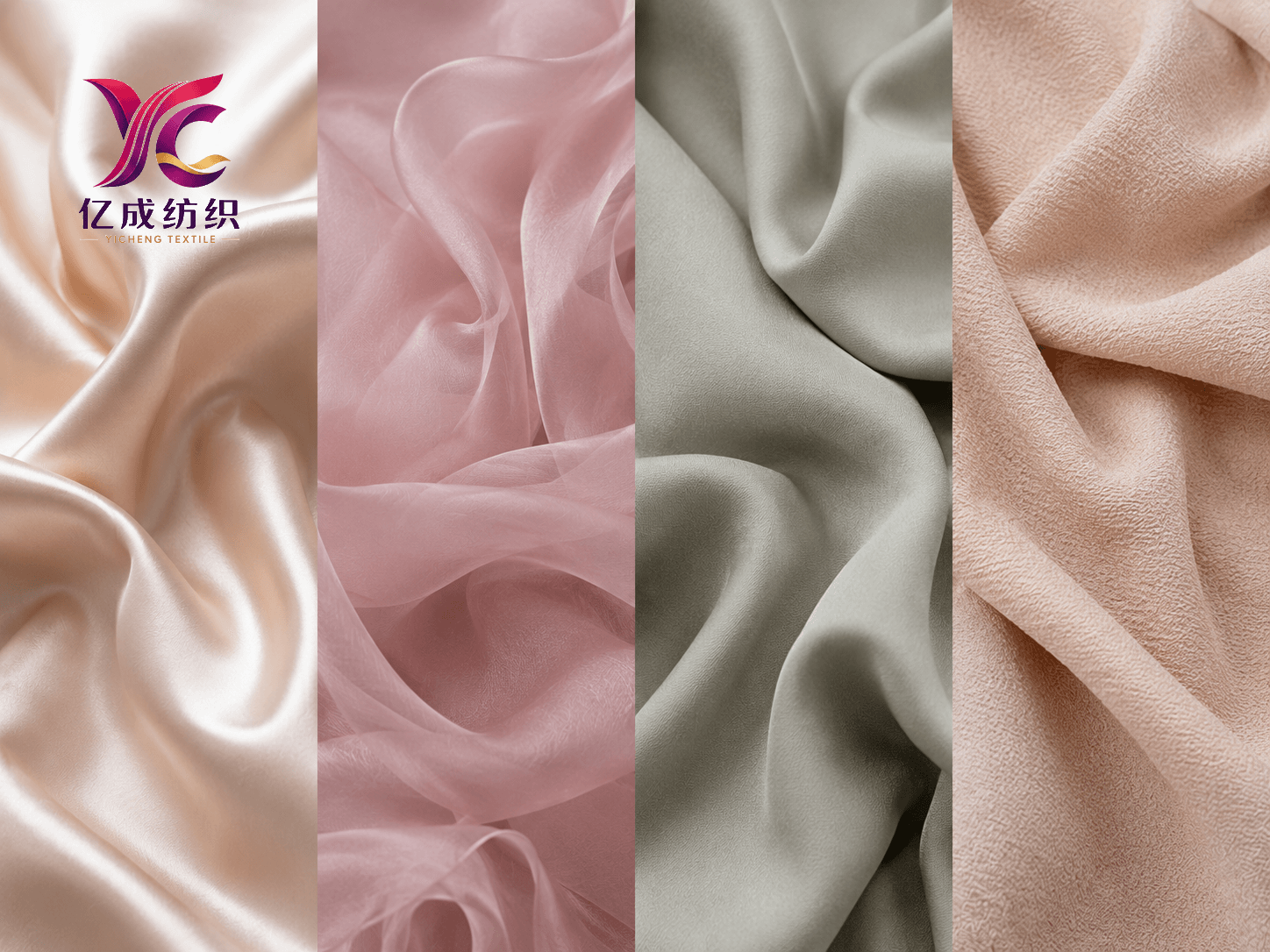
Satin fabric has a smooth surface with a lustrous sheen, commonly used for elegant dresses, formal gowns, evening wear, skirts, blouses, and fashion products.
Because satin has a soft luster and smooth drape, it often looks more premium.
Buyers need to check:
- Surface luster
- Hand feel
- Drape
- Thickness
- Snagging tendency
- Colorfastness
- Lining requirement
- Cutting difficulty
If buyers want a smooth, elegant, and glossy effect, satin is a common choice.
Chiffon Fabric
Chiffon is lightweight, soft, and semi-transparent, often used for summer dresses, layered skirts, blouses, scarves, and fashion details.
Chiffon usually needs a lining because it is sheer.
Buyers need to check:
- Sheerness
- Softness
- Drape
- Color
- Print effect
- Edge finishing
- Lining coordination
- Sewing difficulty
Chiffon suits flowing, lightweight dress styles.
Rayon and Viscose Fabric
Rayon and viscose fabrics are common in women's wear because they usually offer soft hand feel and good drape.
Common uses:
- Casual dresses
- Summer dresses
- Blouses
- Skirts
- Printed women's wear
- Loose-fit garments
Buyers need to pay special attention to shrinkage, as rayon and viscose may change after washing.
Key points:
- Drape
- Hand feel
- Shrinkage
- Colorfastness
- Wrinkling
- Washing method
- Print effect
Polyester Women's Fabric
Polyester fabrics are widely used for dresses and skirts because they are durable, stable, and suitable for bulk production.
Polyester can be made into many types, such as:
- Polyester satin
- Polyester chiffon
- Polyester crepe
- Polyester printed fabric
- Polyester stretch fabric
- Polyester woven fabric
Polyester women's fabric is suitable for mass production, uniforms, fashion items, and export orders.
Buyers need to check hand feel, breathability, colorfastness, and finishing effects.
Cotton Fabric
Cotton fabric suits casual dresses, children's dresses, shirt dresses, and summer skirts.
Common options include:
- Cotton poplin
- Cotton twill
- Cotton voile
- Cotton printed fabric
- Cotton-linen blend
- Cotton spandex stretch fabric
Cotton is breathable and comfortable, but buyers need to check shrinkage, wrinkling, and colorfastness.
Linen-Cotton and Linen-Look Fabric
Linen-cotton and linen-look fabrics are suitable for summer dresses and natural-style women's wear.
These fabrics usually have a natural texture and breathable hand feel.
Buyers need to check:
- Wrinkling
- Hand feel
- Shrinkage
- Thickness
- Color consistency
- Washing performance
Linen-look fabrics suit casual resort-style women's wear.
Stretch Fabric
Stretch fabric is suitable for fitted dresses and skirts.
Common options include:
- Polyester-spandex stretch fabric
- Cotton-spandex stretch fabric
- Nylon-spandex stretch fabric
- Stretch woven fabric
- Ponte Roma
Buyers need to check stretch, recovery, and dimensional stability. Fabrics with poor recovery may loosen over time.
Crepe Fabric
Crepe fabric usually has a slight surface texture and good drape, suitable for dresses, skirts, blouses, and women's fashion.
Buyers need to check surface texture, thickness, hand feel, sheerness, and colorfastness.
If buyers want a fabric that is not too shiny but has good drape, crepe is a practical choice.
How Does Drape Affect Style?
Drape is a very important indicator for dress and skirt fabrics.
Drape refers to how the fabric falls and moves when worn.
Soft drape can create flowing dresses; stiff fabrics can make more structured skirts.
For example:
- Chiffon has a light, flowing feel.
- Satin has a smooth, elegant drape.
- Rayon has a soft, casual drape.
- Cotton poplin has a clean, structured feel.
- Twill has a stiffer body.
- Stretch fabric hugs the body curves more.
Before bulk production, buyers should test fabric with actual styles.
GSM and Thickness
GSM affects fabric weight, thickness, and final appearance.
Common ranges for reference:
- 50–90 GSM: lightweight chiffon, voile, and lining
- 90–140 GSM: lightweight dress fabrics and summer skirts
- 140–200 GSM: regular dress fabrics, poplin, and rayon
- 200–280 GSM: structured skirts, twill, ponte Roma, and heavier women's fabrics
- Above 280 GSM: heavier skirts, winter garments, or special styles
Higher GSM is not always better. The right weight depends on design and season.
Summer dresses usually suit lighter, breathable fabrics; office skirts may need more structured fabrics.
Sheerness and Lining
Many dress fabrics may be slightly sheer, especially chiffon, voile, lightweight rayon, white cotton, and lightweight polyester.
Buyers need to check if lining is required.
Lining can help:
- Reduce sheerness
- Improve wearing comfort
- Enhance garment silhouette
- Protect outer fabric
- Improve overall garment quality
But lining also increases cost and production steps.
Before placing a fabric order, buyers should confirm whether the fabric can be worn alone or must be lined.
Shrinkage Control
Shrinkage is important for dresses and skirts because it affects size and fit.
Buyers need to check especially:
- Rayon and viscose fabrics
- Cotton fabrics
- Linen fabrics
- Knit dress fabrics
- Stretch fabrics
- Printed fabrics
If shrinkage is high, the garment may become shorter or tighter after washing.
Before bulk cutting, garment factories should test shrinkage and adjust patterns as needed.
Colorfastness
Dresses and skirts may use solid colors, bright colors, or printed patterns. Colorfastness must be checked before bulk production.
Buyers need to check:
- Washing colorfastness
- Rubbing colorfastness
- Perspiration colorfastness
- Staining tendency
- Print color stability
- Shade variation between rolls
Dark colors, bright colors, and printed fabrics require special attention.
For Southeast Asian markets, due to hot and humid weather, perspiration and washing colorfastness are especially important.
Printing and Pattern Matching
Many dresses and skirts use printed fabrics.
Buyers need to check:
- Print clarity
- Color accuracy
- Pattern repeat
- Pattern direction
- Cutting waste
- Colorfastness after washing
- Print hand feel
Large prints, stripes, plaids, and directional patterns may require matching during cutting, increasing fabric usage.
Buyers should confirm with garment factories in advance.
Wrinkle Resistance
Wrinkle performance is also important for dresses and skirts.
Some fabrics wrinkle easily, while others recover better.
For example:
- Linen wrinkles easily but has a natural style.
- Cotton wrinkles depending on structure.
- Polyester usually has better wrinkle resistance.
- Rayon may wrinkle and also deform after washing.
- Stretch fabrics usually recover better.
Buyers should choose fabric based on end use. Office skirts and uniform skirts need more wrinkle resistance; casual, natural-style dresses can accept some wrinkles.
!
Cutting and Sewing Difficulty
Some women's fabrics are more difficult to cut and sew.
Difficult fabrics include:
- Very slippery satin
- Very lightweight chiffon
- Stretch fabrics
- Lace fabrics
- Sheer fabrics
- Directional printed fabrics
- Fabrics with unstable edges
These fabrics require more careful production and skilled workers.
Before bulk production, buyers should confirm that the factory can handle such fabric consistently.
How to Choose Fabrics for Different Products?
Summer Dresses
Summer dresses need lightweight, breathable, comfortable fabrics.
Common choices include chiffon, rayon, cotton voile, cotton poplin, linen-cotton, and lightweight polyester.
Formal and Party Dresses
Formal and party dresses can use satin, chiffon, crepe, lace, sequin fabric, or glossy polyester.
Buyers need to focus on appearance, drape, luster, and lining.
Casual Dresses
Casual dresses can use cotton, rayon, polyester, printed woven, or stretch knit fabrics.
Comfort, washing performance, and price are important.
Office Skirts
Office skirts usually need more structure and better wrinkle resistance.
Polyester woven, twill, stretch woven, and ponte Roma can be considered.
School Uniform Skirts
School uniform skirts need durability, color stability, and easy care.
Polyester-cotton, twill, and uniform fabrics are practical choices.
Fashion Skirts
Fashion skirts can use satin, chiffon, denim, cotton, rayon, crepe, lace, or printed fabric depending on style.
Drape, color, and final silhouette are important.
Fabric Suggestions for Vietnam and Thailand Buyers
Vietnam, Thailand, and Southeast Asian markets usually need fabrics suitable for warm weather.
Recommend focusing on these features:
- Light to medium GSM
- Breathable hand feel
- Good drape
- Stable colorfastness
- Low shrinkage
- Comfortable lining if needed
- Good print effect
- Flexible MOQ for trial orders
For casual summer dresses, consider rayon, chiffon, cotton, and lightweight polyester. For skirts and uniform skirts, consider polyester woven, twill, and stretch woven fabrics.
What Information Should Buyers Provide?
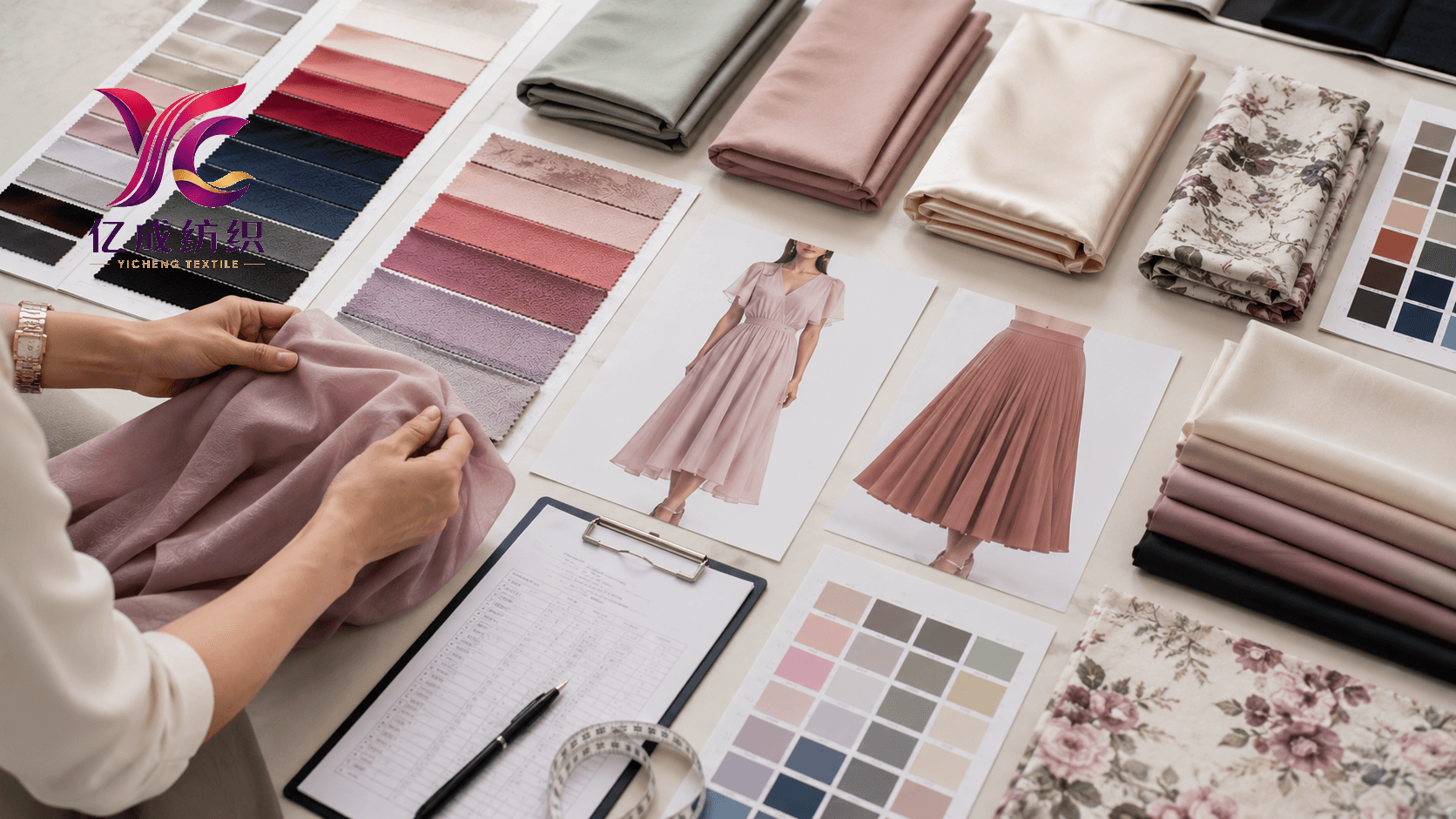
To help suppliers recommend the right fabric accurately, buyers should provide:
- Product type
- Known fabric type
- Material or composition
- GSM weight
- Width
- Color
- Print requirements
- Quantity
- Lining requirement
- Shrinkage requirement
- Colorfastness requirement
- Sample requirement
- Destination country
- Target price if available
For example:
“I need satin fabric for women's dresses, medium drape, 150 cm width, black and champagne, 500 meters per color. Please provide samples and MOQ.”
The clearer the information, the faster suppliers can recommend suitable fabrics.
Common Mistakes
Buyers need to avoid these mistakes:
- Selecting fabric by picture only
- Not checking drape
- Ignoring sheerness
- Not confirming lining requirement
- Not testing shrinkage
- Ignoring wrinkling
- Not checking colorfastness
- Not confirming print direction
- Not requesting physical samples
- Not confirming MOQ per color or pattern
Dress and skirt fabrics must match design, production process, and target market.
Summary
Selecting fabric for dresses and skirts requires focus on drape, hand feel, GSM, sheerness, lining, shrinkage, colorfastness, print, wrinkle resistance, and sewing performance.
For garment factories and fabric wholesale buyers, the right fabric makes garments look better, fit better, and reduces production risks.
If you are looking for satin, chiffon, rayon, polyester women's fabric, cotton, stretch fabric, or skirt fabric, send an inquiry directly. We can recommend suitable fabric solutions for garment factories in Vietnam, Thailand, and Southeast Asia.
FAQ
What fabric is commonly used for dresses?
Satin, chiffon, rayon, polyester, cotton, and crepe are all common dress fabrics, depending on style, season, and price.
What fabric is suitable for skirts?
Twill, polyester woven, satin, cotton, denim, crepe, and stretch fabric can all be used for skirts.
Is chiffon suitable for dresses?
Yes. Chiffon is lightweight and flowing, suitable for summer dresses, layered skirts, and fashion details, but usually requires a lining.
Is satin suitable for dresses?
Yes. Satin has a smooth, lustrous surface and is suitable for elegant dresses, formal gowns, and skirts.
Should women's fabric be tested before bulk production?
Yes. Buyers should check drape, shrinkage, colorfastness, sheerness, lining needs, and sewing performance before bulk production.


