
How to Check Fabric Quality Before Bulk Production? A Garment Factory Procurement Guide
Published Sep 15, 2023

A guide for garment factories and fabric wholesale buyers on how to check fabric quality before bulk production, including GSM, width, shrinkage, color fastness, fabric defects, hand feel, and sample approval.
How to Check Fabric Quality Before Bulk Production? A Garment Factory Procurement Guide
Fabric quality control is very important before garment mass production. Even if the fabric looks good initially, problems such as shrinkage, color deviation, incorrect grammage, insufficient width, and fabric surface defects may arise later.
For garment factories and fabric wholesale buyers, checking fabric quality before cutting can reduce waste, delays, and customer complaints.
This article will introduce how to check fabric quality before bulk production, including GSM, width, shrinkage, color fastness, fabric defects, hand feel, and sample approval.
Why is fabric quality inspection important?
Fabric is the foundation of garment production. If the fabric has problems, the final garment is also prone to issues.
Common fabric problems include:
- Wrong GSM
- Insufficient width
- Color deviation
- Poor color fastness
- High shrinkage rate
- Inconsistent hand feel
- Holes
- Stains
- Yarn defects
- Poor elastic recovery
- Incorrect composition
- Damaged packaging
For garment factories, these problems can cause cutting waste, sizing issues, customer rejections, or delivery delays.
Therefore, it is best to confirm fabric quality before bulk production.
First, check the approved sample
Before inspecting bulk fabric, buyers should have an approved sample as a standard.
Approved samples can be:
- Fabric swatch
- Lab dip
- Sample yardage
- Pre-production sample
- Customer approved sample
- Retained sample from previous order
Buyers need to compare:
- Color
- Hand feel
- GSM
- Width
- Texture
- Stretch
- Thickness
- Finishing effect
- Overall appearance
The approved sample should be kept as the standard for bulk inspection. Without a standard, quality assessment becomes difficult.
Check GSM
GSM is grams per square meter, used to judge fabric thickness and weight.
GSM affects:
- Thickness
- Hand feel
- Durability
- Cost
- Garment appearance
- Customer perception
Before cutting bulk, buyers should check whether the actual GSM meets order requirements.
For example, if the order requires 180 GSM cotton single jersey but the bulk fabric is noticeably lighter, the final T-shirt may feel too thin.
Fabric production may have reasonable tolerances, but buyers should confirm acceptable ranges with suppliers before ordering.
Check fabric width
!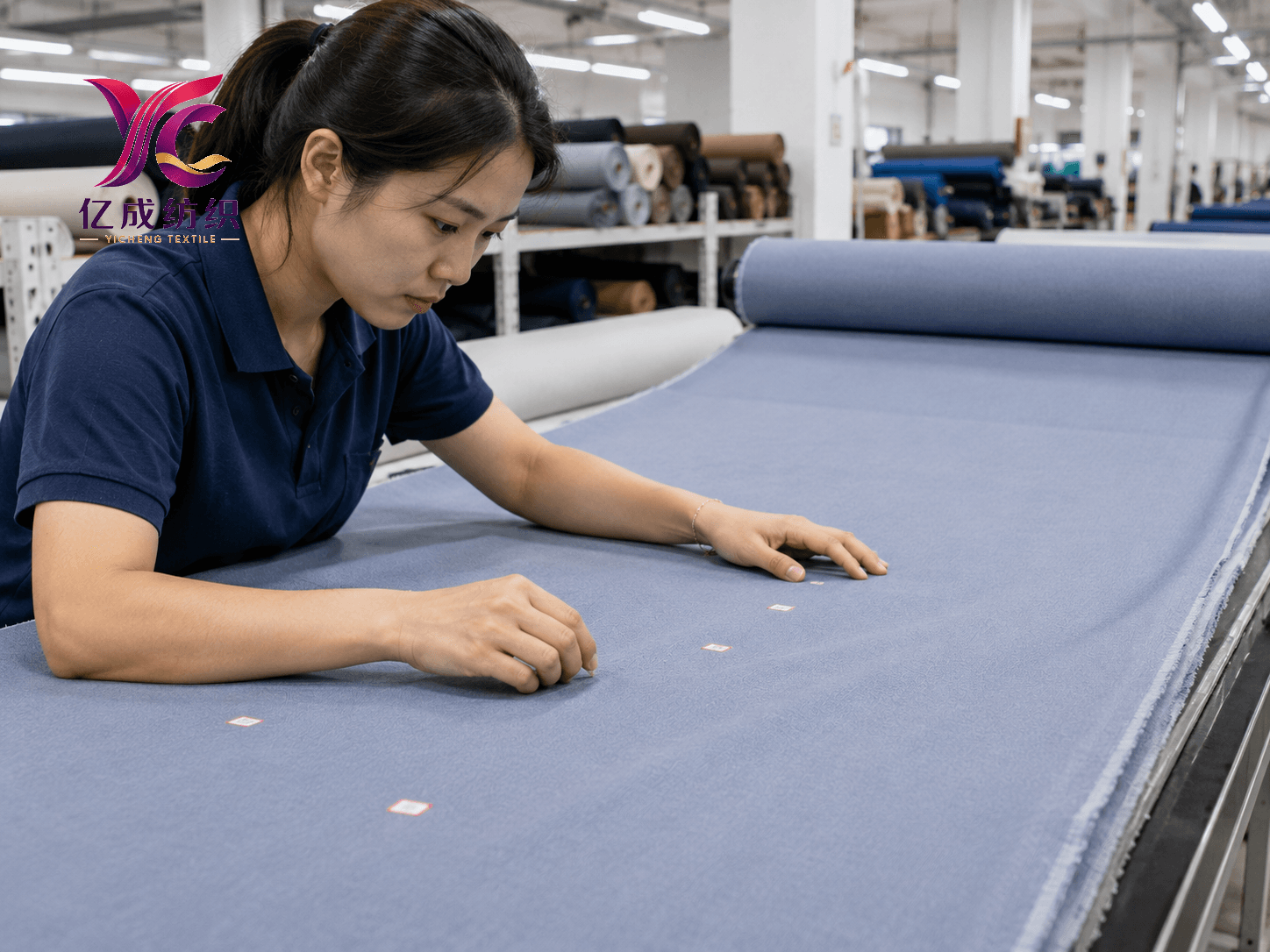
Width affects cutting efficiency and fabric consumption.
If the actual width is narrower than expected, the garment factory may need more fabric to complete the same order quantity.
Buyers need to check:
- Actual usable width
- Open width or tubular width
- Width stability
- Width after finishing
- If needed, width after washing
Before bulk production, width should be confirmed before planning layout and cutting.
If the width is wrong, the cutting plan may need to be adjusted.
Check shrinkage
!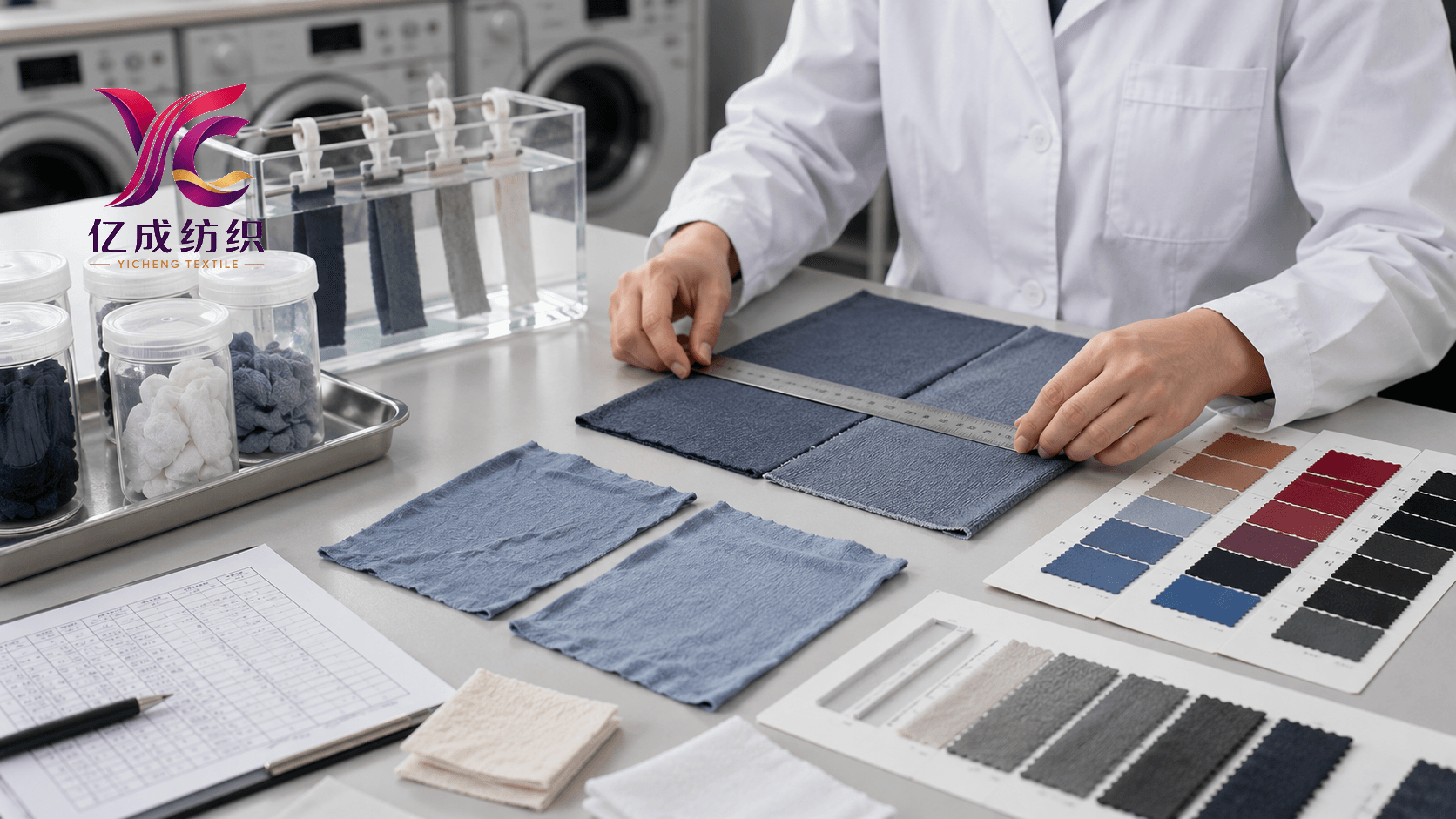
Shrinkage is a very important quality indicator in garment production.
Fabric may shrink after washing, steaming, dyeing, or finishing. If shrinkage is not controlled, garment size may become smaller after washing.
Buyers should test:
- Warp shrinkage
- Weft shrinkage
- Shrinkage after washing
- Change after drying
- If needed, change after ironing or steaming
Shrinkage is especially important for cotton, knits, denim, and garments that require subsequent washing.
Before bulk production, garment factories should know the fabric shrinkage rate and adjust patterns accordingly.
Check color fastness
Color fastness refers to the fabric's ability to maintain color stability when subjected to washing, rubbing, perspiration, or light.
Poor color fastness can cause:
- Fading
- Color bleeding
- Staining other garments
- Customer complaints
- Bulk rejection
Buyers should focus on:
- Washing color fastness
- Rubbing color fastness
- Perspiration color fastness
- If needed, light color fastness
Dark colors, bright colors, uniforms, sportswear, and denim require special attention to color fastness.
For export orders, customers may also require formal test reports.
Check color deviation
Color deviation may occur between sample and bulk, or between different rolls of the same batch.
Buyers need to check:
- Color deviation between sample and bulk
- Color deviation between rolls
- Color deviation under different lighting
- Color consistency within the same roll
- Color change after washing
For custom dyed fabrics, the approved lab dip or bulk approval sample should be used as the standard.
If color deviation is obvious, buyers should handle rolls separately before cutting, or communicate with the supplier for a solution.
Check fabric surface defects
Fabric surface defects affect garment appearance and cutting efficiency.
Common fabric surface defects include:
- Holes
- Stains
- Oil spots
- Broken yarns
- Slubs
- Uneven dyeing
- Creases
- Streaks
- Knitting defects
- Weaving defects
- Printing defects
Garment factories should inspect fabric rolls before cutting and mark defects.
Large orders can use professional fabric inspection standards. Even for small and medium orders, basic roll inspection should be done.
Check hand feel and fabric surface effect
Hand feel is important because customers often judge fabric quality by touch.
Buyers should check whether the bulk fabric hand feel matches the approved sample.
Key points include:
- Softness
- Thickness
- Smoothness
- Stretch
- Surface texture
- Drape
- Finishing effect
T-shirts, underwear, baby and children's clothing, and sportswear particularly emphasize hand feel; uniforms and workwear focus more on structure and durability.
Check stretch and recovery
For stretch fabrics, buyers need to check both stretch and recovery.
Stretch refers to how much the fabric can stretch, and recovery refers to whether it returns to its original shape after stretching.
Fabrics with poor recovery may become loose and deformed after wearing.
These products especially need attention to stretch and recovery:
- Spandex stretch fabrics
- Sportswear
- Leggings
- Fitted T-shirts
- Women's wear
- Stretch denim
- Stretch uniform fabrics
Before bulk production, buyers should confirm that stretch meets garment requirements.
Check fabric composition
Fabric composition should match order requirements.
For example:
- 100% cotton
- 65% polyester 35% cotton
- 95% cotton 5% spandex
- 100% polyester
- Cotton-polyester blend
Composition affects hand feel, shrinkage, dyeing, durability, price, and washing performance.
If the order has strict composition requirements, buyers can ask the supplier for a test report or written confirmation.
Check printing and finishing
If the fabric has printing, coating, or special finishing, buyers need to confirm that the effect meets requirements.
Common inspection items include:
- Print clarity
- Print color
- Coating uniformity
- Water repellency
- Quick-dry finish
- Brushed effect
- Sanded effect
- Anti-static finish
- Softening finish
For printed fabrics, check pattern placement, color accuracy, and repeat consistency.
For coated fabrics, check hand feel, coating quality, and risk of peeling.
Check packaging and roll condition
Fabric quality is not just about the fabric itself; packaging is also important.
Buyers need to check:
- Length per roll
- Roll label information
- Roll number
- Packaging condition
- Whether damp
- Whether dirty or damaged
- Inner and outer packaging
- Batch information
Good packaging protects the fabric and facilitates warehouse management.
For repeat orders, keep roll numbers and batch records for easier traceability if problems arise later.
Pre-cutting quality inspection checklist
Before cutting, garment factories should confirm that the fabric is ready for production.
A simple checklist includes:
- Approved sample compared
- GSM checked
- Width checked
- Color checked
- Shrinkage tested
- Color fastness confirmed
- Defects marked
- Hand feel confirmed
- If needed, stretch checked
- Roll number information recorded
If problems are found, it is best to resolve them before cutting. Once fabric is cut, it becomes more difficult to handle issues later.
What can buyers ask suppliers before ordering?
Before placing a bulk order, buyers can ask suppliers:
- What is the fabric composition?
- What is the GSM tolerance?
- What is the width tolerance?
- Can you provide sample yardage?
- What is the shrinkage rate?
- Has color fastness been tested?
- Is the fabric in stock or custom?
- Can you inspect the rolls before shipment?
- Do you keep an approved sample as standard?
- How do you handle serious quality problems?
Clear communication in advance can reduce procurement risks.
Summary
Checking fabric quality before bulk production is very important for garment factories and fabric wholesale buyers. Buyers need to check approved samples, GSM, width, shrinkage, color fastness, color deviation, fabric surface defects, hand feel, stretch, composition, finishing, and packaging.
Good fabric quality control can reduce cutting waste, production delays, and customer complaints.
If you are looking for stable quality cotton, polyester, denim, knitted, woven, or custom fabrics, you can send an inquiry directly. We can recommend suitable fabric solutions for garment factories in Vietnam, Thailand, and Southeast Asia.
FAQ
Why check fabric before bulk production?
Checking fabric before bulk production can avoid problems such as shrinkage, color deviation, incorrect grammage, fabric surface defects, and production waste.
What is the most important thing to check in fabric quality?
Common key points include GSM, width, shrinkage, color fastness, color deviation, fabric surface defects, and hand feel.
Why is shrinkage important?
Shrinkage affects garment size. If the fabric shrinkage rate is too high, the garment may become smaller after washing.
What is color fastness?
Color fastness is the fabric's ability to maintain color stability when subjected to washing, rubbing, perspiration, or light.
Is it necessary to confirm a sample before bulk production?
Yes. An approved sample allows both buyer and supplier to use the same quality standard before bulk production.


