
What Is Fabric Shrinkage? A Guide for Garment Factory Procurement and Production
Published Dec 15, 2023

Explains what fabric shrinkage is, why garment factories need to pay attention to it, and how to test shrinkage, control risks, and confirm fabric quality before bulk production.
What Is Fabric Shrinkage? A Guide for Garment Factory Procurement and Production
Fabric shrinkage is a critical quality indicator in garment production. If shrinkage is not controlled, garments may become smaller after washing, steaming, or finishing, leading to size inaccuracies, customer complaints, or even rejection of bulk shipments.
For garment factories and wholesale fabric buyers, understanding fabric shrinkage can help reduce production risks before cutting and sewing.
This article explains what fabric shrinkage is, why it happens, how to test it, and what buyers should confirm before bulk production.
What Is Fabric Shrinkage?
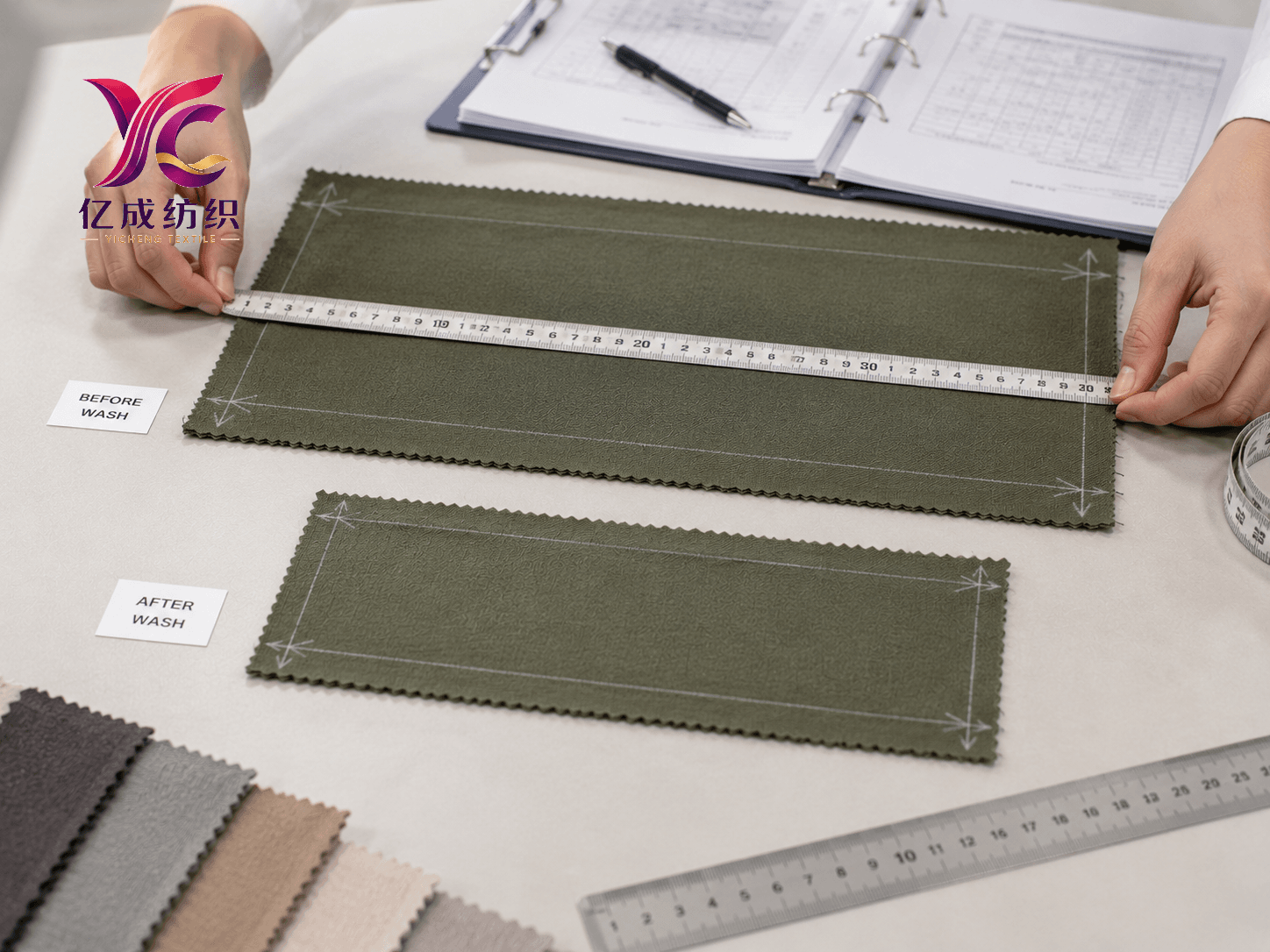
Fabric shrinkage refers to the percentage reduction in size of a fabric after washing, drying, steaming, ironing, or finishing.
Shrinkage can occur in:
- Length direction
- Width direction
- Both length and width directions
- After washing
- After drying
- After steaming
- After garment washing
For example, if a fabric measures 100 cm before washing and 97 cm after washing, the shrinkage rate is 3%.
Most fabrics have some degree of shrinkage; the key is to keep it within an acceptable range.
Why Is Shrinkage Important?
Shrinkage directly affects garment dimensions.
If fabric shrinkage is too high, garments may become smaller after washing. This is especially critical for T-shirts, uniforms, pants, dresses, children's wear, and export orders.
Uncontrolled shrinkage can lead to:
- Incorrect garment sizing
- Poor fit
- Customer complaints
- Returns
- Production delays
- Increased cutting waste
- Difficulty in pattern adjustments
- Failed bulk inspections
For garment factories, shrinkage should be confirmed before bulk cutting, not after garments are made.
!
Why Does Fabric Shrink?
There are many reasons for fabric shrinkage.
Common causes include:
- Fiber type
- Yarn tension
- Knitting or weaving tension
- Dyeing processes
- Washing processes
- Drying methods
- Finishing processes
- High temperature and steam
- Relaxation after production
- Garment washing
During fabric production, yarn and fabric may be subjected to tension. After washing or steaming, the fabric relaxes to a more natural state, causing shrinkage.
Warp Shrinkage and Weft Shrinkage
Shrinkage should be tested in both directions.
Warp Shrinkage
Warp shrinkage occurs along the length of the fabric.
It affects garment length, sleeve length, pants length, and dress length.
Weft Shrinkage
Weft shrinkage occurs along the width of the fabric.
It affects chest, waist, hip measurements, and cutting efficiency.
Some fabrics shrink more in one direction than the other. Buyers should check both warp and weft shrinkage.
Shrinkage Characteristics of Different Fabrics
Different fabrics have different shrinkage behaviors.
Cotton Fabric
Cotton fabrics tend to shrink after washing, especially those without pre-shrinking or stabilizing finishes.
Cotton jersey, cotton poplin, cotton twill, and cotton denim all need shrinkage checks before bulk production.
Knit Fabric
Knit fabrics, due to their loop structure and elasticity, often require more attention to shrinkage.
Common knit fabrics include cotton jersey, rib, interlock, fleece, and stretch knits.
For knits, buyers should focus on shrinkage, GSM, width, elasticity, and hand feel after washing.
Woven Fabric
Woven fabrics are generally more stable than knits, but they can still shrink.
Poplin, twill, denim, oxford, and canvas should be checked, especially when used for shirts, uniforms, pants, and workwear.
Denim
Denim shrinkage is very important because denim garments often undergo washing.
Jeans factories should check shrinkage changes both before and after washing.
Polyester Fabric
Polyester fabrics are usually more dimensionally stable than cotton, but they can still be affected by high temperatures, finishing, or blends.
Polyester-spandex, polyester mesh, and polyester blends should also be tested before production.
Rayon and Viscose Fabric
Rayon and viscose fabrics may shrink or deform more easily after washing.
When these fabrics are used for dresses, blouses, or fashion items, buyers should pay special attention to size changes after washing.
How to Test Fabric Shrinkage?
A basic shrinkage test can help buyers assess fabric changes after washing.
Simple procedure:
- Cut a fabric sample.
- Mark a measurement area on the sample, e.g., 50 cm x 50 cm.
- Wash the sample according to intended washing method.
- Dry the sample according to intended drying method.
- Re-measure the marked area.
- Calculate shrinkage percentage.
Shrinkage formula:
```txt
Shrinkage = (Before Size - After Size) / Before Size × 100Exampl:
Before: 100 cm
After: 97 cm
Shrinkage: 3%
Garment factories should test both length and width directions.
Washing method affects results
Shrinkage test results are influenced by washing methods.
Buyers need to confirm:
Washing temperature
Washing time
Detergent
Machine wash or hand wash
Drying method
Tumble dry or line dry
Ironing or steaming
Number of wash cycles
The test method should closely simulate actual garment use or align with customer requirements.
For export orders, buyers may need to follow customer-specified test standards.
What Is an Acceptable Shrinkage Rate?
There is no universal shrinkage standard. It depends on fabric type, garment use, and customer requirements.
For example:
T-shirt fabrics need low and stable shrinkage.
Uniform fabrics require dimensional stability after repeated washing.
Denim needs shrinkage confirmation before washing.
Children's wear typically demands stricter quality control.
Fashion fabrics may prioritize drape and appearance.
Before placing orders, buyers should confirm acceptable shrinkage limits with suppliers and customers.
How to Control Shrinkage?
Fabric shrinkage can be controlled through production and finishing.
Common methods include:
Pre-shrinking
Heat setting
Sanforizing (compacting)
Compacting for knits
Pre-shrinking processes for some wovens
Washing treatments
Relaxing fabric before cutting
Proper drying
Stable finishing processes
Shrinkage testing before bulk production
Different fabrics suit different methods.
Knits often improve dimensional stability through finishing; wovens can reduce shrinkage risk through pre-shrinking and finishing.
Confirming Shrinkage Before Cutting
Fabric should be tested for shrinkage before cutting.
If shrinkage is high, garment factories may need to:
Adjust patterns
Wash or relax fabric before cutting
Change fabric suppliers
Request more stable finishing
Discuss risks with customers
Reject non-compliant fabric before production
Once fabric is cut and sewn, addressing shrinkage becomes much more difficult.
!
Why Relax Fabric Before Cutting?
Some fabrics need to relax before cutting, especially knits and stretch fabrics.
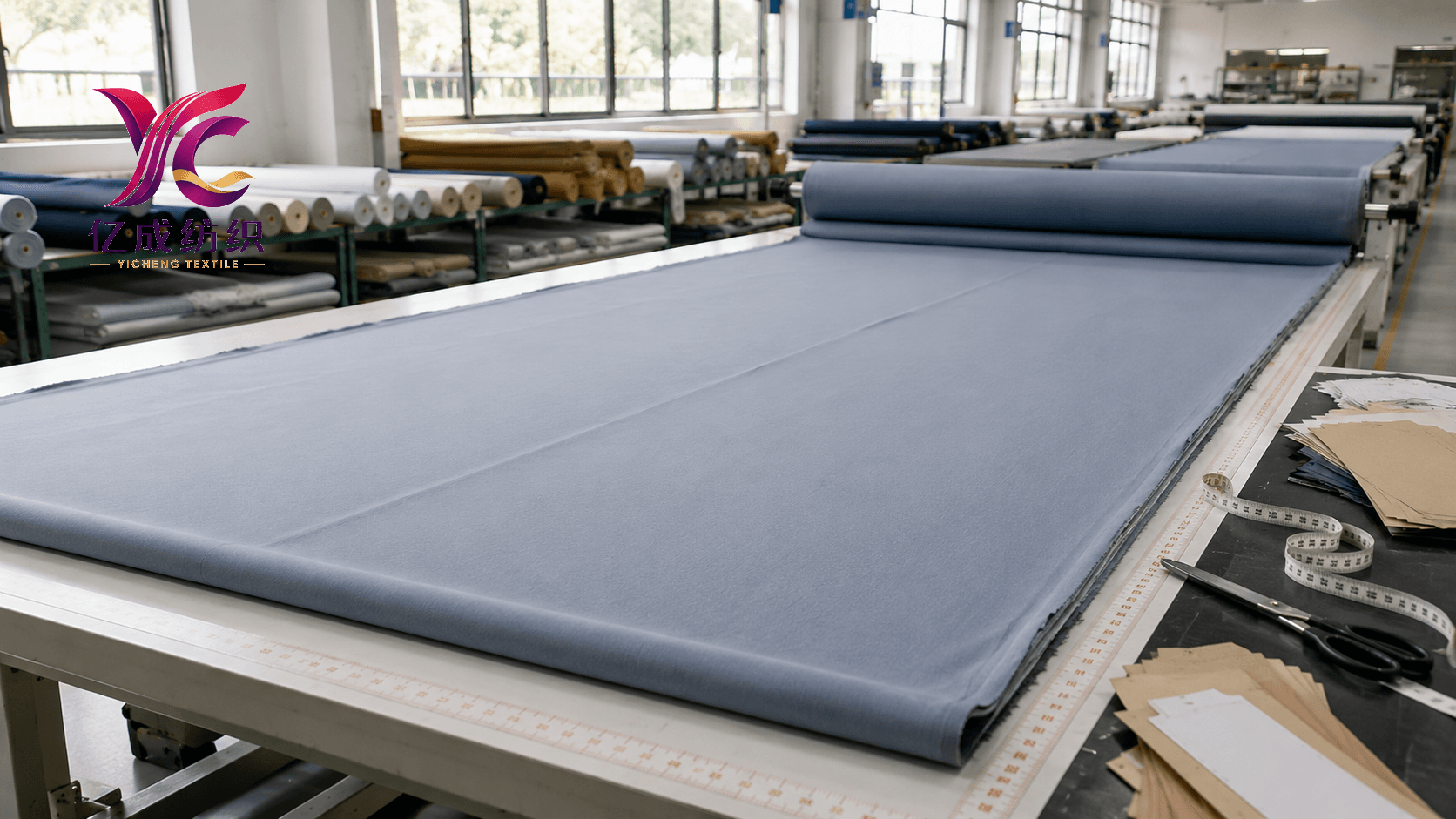
Fabric in roll form may have tension. After opening the roll, the fabric will relax naturally, and width and length may change slightly.
Allowing fabric to rest before cutting helps reduce deformation and size issues.
Fabric relaxation is especially important for:
Knit fabrics
Spandex stretch fabrics
Stretch denim
Rib fabrics
Sportswear fabrics
Lightweight stretch fabrics
Shrinkage and Pattern Adjustments
Shrinkage affects pattern design.
If fabric has a known shrinkage rate, garment factories may need to add shrinkage allowance in patterns.
For example, if fabric shrinks after washing, patterns should be enlarged accordingly to ensure correct garment size after washing.
This is common for:
T-shirts
Fleece
Pants
Jeans
Uniforms
Children's wear
Washed garments
Production teams must know the fabric shrinkage before bulk cutting.
Shrinkage and Fabric Width
Shrinkage also affects fabric width.
If width changes significantly after washing or relaxing, it impacts cutting efficiency and garment dimensions.
Buyers need to check:
Original width
Width after washing
Width after relaxing
Usable width
Width consistency across rolls
For garment factories, width shrinkage affects both quality and cost.
Common Mistakes
Buyers should avoid these mistakes:
Not testing shrinkage before bulk production
Only checking hand feel and color
Ignoring weft shrinkage
Not confirming washing methods
Assuming all cotton shrinks the same
Assuming polyester does not shrink at all
Cutting without fabric relaxation
Not keeping test samples
Not confirming shrinkage tolerance
Not adjusting patterns when needed
Shrinkage control requires cooperation between suppliers and garment factories.
What Should Buyers Ask Suppliers?
Before placing bulk orders, buyers can ask suppliers:
What is the estimated shrinkage for this fabric?
Has pre-shrinking been done?
What finishing processes were used?
Has post-wash shrinkage testing been done?
What are warp and weft shrinkage rates?
Can sample yardage be provided for testing?
Is the fabric suitable for garment washing?
What is the width after washing?
What washing method is recommended?
Can a confirmed sample be kept as a standard?
These questions can help buyers reduce risk before production.
What Information Should Buyers Provide?
To help suppliers recommend suitable fabrics, buyers should provide:
Fabric type
Material or composition
GSM weight
Width
Color
Quantity
Garment type
Washing requirements
Shrinkage requirements
Whether samples are needed
Destination country
Customer quality standards, if any
For example:
"I need cotton jersey, 180 GSM, 180 cm width, for T-shirts. The garments will be machine washed. Please provide post-wash shrinkage information."
Such inquiries are clearer and easier for suppliers to follow.
Summary
Fabric shrinkage is a quality indicator that garment factories and wholesale fabric buyers must pay attention to. It affects garment sizing, fit, cutting efficiency, production cost, and customer satisfaction.
Before bulk production, buyers should check both warp and weft shrinkage, confirm washing methods, compare with confirmed samples, and communicate acceptable limits with suppliers.
If you are looking for stable shrinkage cotton, polyester, denim, knits, wovens, or custom fabrics, feel free to send an inquiry. We can recommend suitable fabric solutions for garment factories in Vietnam, Thailand, and Southeast Asia.
Frequently Asked Questions
What is fabric shrinkage?
Fabric shrinkage is the percentage reduction in size after washing, drying, steaming, or finishing.
Why is fabric shrinkage important?
Shrinkage affects garment size. If too high, garments can become smaller after washing, causing size issues.
How is fabric shrinkage calculated?
Shrinkage = (Before size - After size) / Before size × 100%.
Which fabrics are more prone to shrinkage?
Cotton, knits, denim, rayon, and viscose fabrics typically need more attention.
Should shrinkage be tested before cutting?
Yes. Testing before bulk cutting can avoid size issues after garment production.


