
What Does Fabric MOQ Mean? A Buyer's Guide for Fabric Wholesale
Published Dec 15, 2022

Introduces what MOQ means in fabric wholesale, why suppliers set minimum order quantities, and the differences between stock fabrics, custom colors, custom GSM, samples, and bulk orders.
What Does Fabric MOQ Mean? A Buyer's Guide for Fabric Wholesale
When buyers look for fabric suppliers, they often ask: What is the MOQ?
MOQ stands for Minimum Order Quantity. In fabric sourcing, MOQ refers to the minimum quantity a supplier requires to accept an order. MOQ may vary for stock fabrics, custom colors, custom GSM, printing, dyeing, and special finishing.
For garment factories and fabric wholesale buyers, understanding MOQ can reduce communication time and help buyers better arrange samples, trial orders, and bulk production.
What Does MOQ Mean in Fabric Sourcing?
MOQ is the minimum order quantity.
In fabric sourcing, it indicates the minimum amount of fabric a buyer must purchase for the supplier to accept the order.
Fabric MOQ may be calculated by:
- Meters
- Kilograms
- Rolls
- Per color
- Per fabric type
- Per dye lot
- Per production batch
For example, a supplier might state:
- Stock fabric MOQ: 50 meters
- Custom color MOQ: 500 meters per color
- Custom dyeing MOQ: 1000 meters per color
- Print MOQ: 300 meters per design
- Special finishing MOQ: Confirmed based on production
So MOQ is not fixed; it varies depending on fabric type, stock availability, and customization requirements.
Why Do Fabric Suppliers Set MOQs?
Fabric suppliers set MOQs because fabric production and sourcing involve fixed costs.
Even small orders may involve:
- Fabric preparation
- Cutting or rolling
- Packaging
- Warehouse labor
- Dyeing or finishing machine startup
- Shade matching
- Machine adjustment
- Quality inspection
- Logistics arrangement
For custom fabrics, MOQ is typically higher because dyeing, printing, or production requires a certain batch size to be feasible.
If the order quantity is too small, suppliers struggle to control costs and arrange production efficiently.
!
Stock Fabric MOQ vs. Custom Fabric MOQ
Generally, stock fabric MOQ is lower, while custom fabric MOQ is higher.
Stock Fabric MOQ
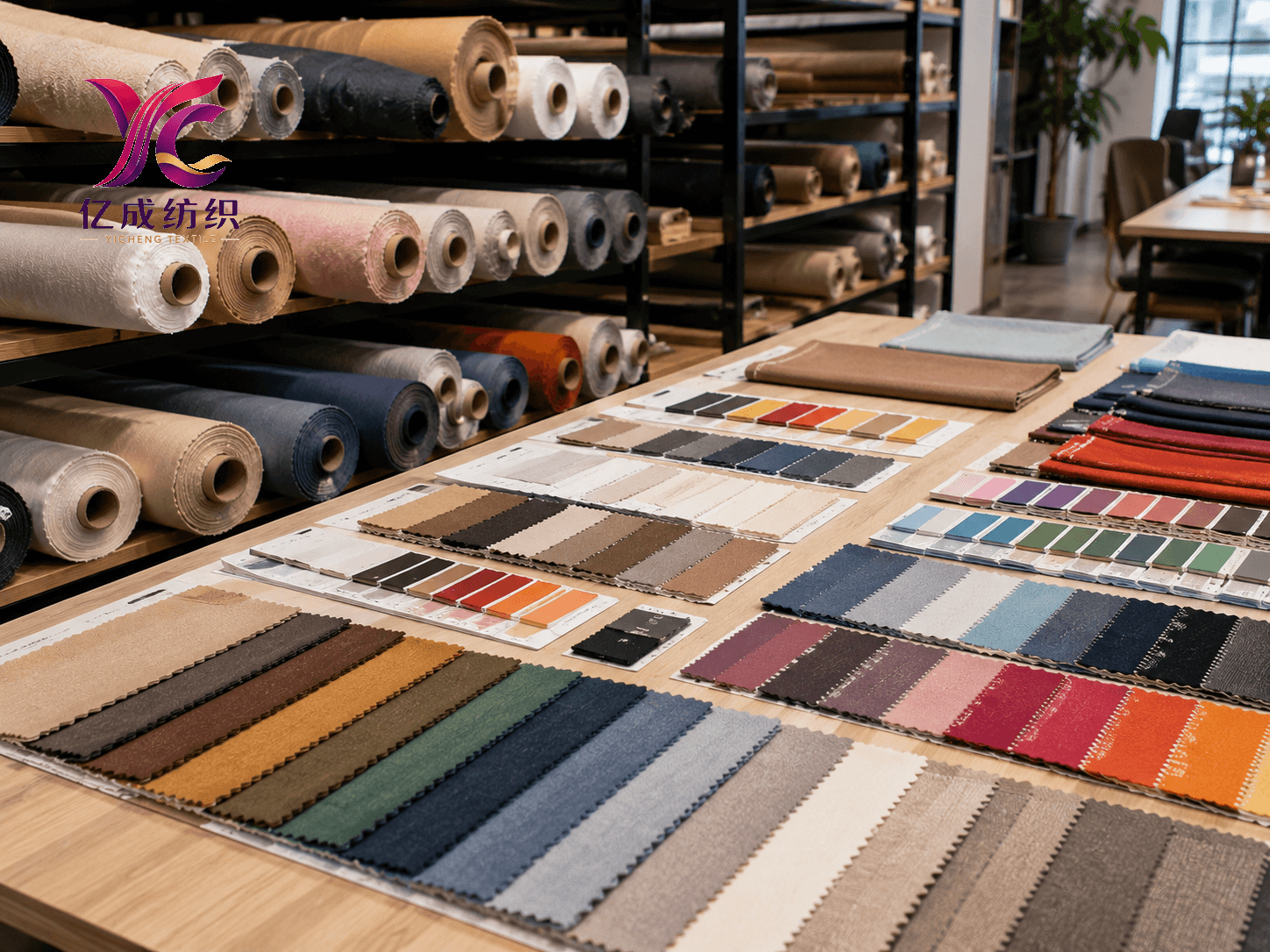
Stock fabrics are fabrics already available in the market or warehouse.
Stock fabrics usually have lower MOQ because no new production is needed.
They are suitable for:
- Sample orders
- Small trial orders
- Small-batch garment production
- Urgent orders
- New product testing
If a buyer is just testing the market, stock fabrics are often a better starting point.
Custom Fabric MOQ
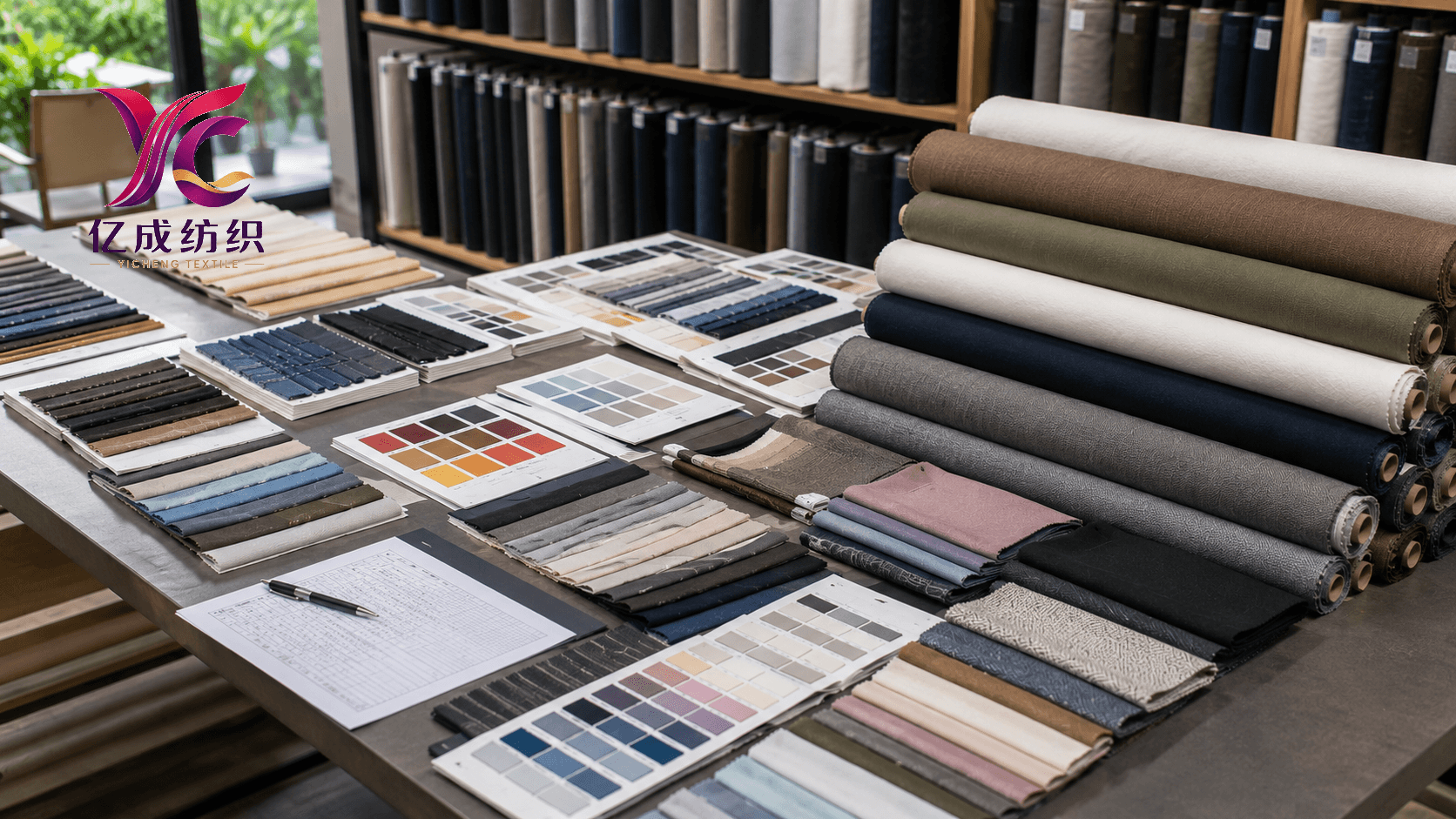
Custom fabrics refer to fabrics with special requirements, such as custom color, custom GSM, custom width, custom composition, printing, or finishing.
Custom fabrics typically have higher MOQ because they may require new dyeing, weaving, knitting, or finishing production.
They are suitable for:
- Stable bulk orders
- Brand orders
- Long-term repeat orders
- Specific customer requirements
- Export garment orders
Before ordering custom fabrics, confirm MOQ, production lead time, and sample approval.
!
Why Is Custom Color MOQ Higher?
Custom color MOQ is usually higher because dyeing production requires a minimum batch size.
The dyeing process may involve:
- Lab dips
- Shade matching
- Dyeing machine scheduling
- Fabric preparation
- Washing and finishing
- Color inspection
- Quality control
If the quantity is too small, the dyeing cost per meter becomes high.
Therefore, suppliers often set MOQ per color rather than just as a total quantity.
For example, if a buyer needs 4 colors, the MOQ may be calculated separately for each color.
MOQ and Custom GSM
Custom GSM may also require a higher MOQ.
If a buyer needs a specific weight, the supplier may need to arrange knitting, weaving, or production accordingly.
For example:
- 180 GSM cotton jersey may be in stock.
- 205 GSM cotton jersey may need custom production.
- 240 GSM twill may require different yarns or weaving arrangements.
Before requesting custom GSM, buyers can ask if the supplier has a close weight in stock. Accepting a similar weight can sometimes lower MOQ and shorten lead time.
MOQ and Fabric Width
Fabric width also affects MOQ.
Some widths are common, such as 150 cm, 160 cm, 170 cm, 180 cm, depending on fabric type.
If a buyer needs a special width, different machines or production arrangements may be required, so MOQ and production time may increase.
For garment factories, width affects cutting efficiency and fabric consumption. If the target width is not in stock, buyers can ask the supplier to recommend a close alternative.
MOQ for Sample Orders
Sample orders and bulk orders are usually different.
Suppliers may offer:
- Small swatches
- Sample meters
- Color cards
- Stock samples
- Paid cuttings
- Test rolls
Samples help buyers check hand feel, GSM, color, width, stretch, shrinkage, and quality before bulk production.
Even if bulk MOQ is high, many suppliers can support sample confirmation first.
For B2B fabric buyers, confirming samples before bulk orders is very important.
How Does MOQ Affect Price?
MOQ and price are closely related.
Generally:
- Larger quantities may get better prices.
- Smaller quantities may have higher unit prices.
- Stock fabrics are more flexible for small orders.
- Custom fabrics may have higher MOQ and startup costs.
- Special finishing increases cost.
Buyers should not just ask "What is the lowest price?" They should also clarify the quantity, color, GSM, and width corresponding to that price.
If the price is given without a clear MOQ, misunderstandings can easily occur.
What If the MOQ Is Too High?
If a buyer feels the MOQ is too high, they can discuss more practical options with the supplier.
Possible solutions include:
- Use stock fabric first
- Choose existing colors
- Accept a close GSM
- Consolidate color requirements
- Get sample meters first
- Do a small trial order
- Increase quantity for a better price
- Plan repeat orders
- Ask the supplier to recommend alternative fabrics
A good supplier should help buyers find flexible solutions, not just say it's not possible.
What Information Should I Provide When Asking About MOQ?
When asking about MOQ, buyers should provide clear information.
It is recommended to provide:
- Fabric type
- Material or composition
- GSM weight
- Width
- Color
- Quantity
- End use
- Custom requirements
- Whether samples are needed
- Delivery country
- If there is a target price, it can also be shared
For example, don't just ask "What is the MOQ for cotton fabric?"
A better question would be:
"I need cotton jersey, 180 GSM, 180 cm width, black and white, for T-shirt production. What is the MOQ per color?"
The clearer the information, the more accurate the supplier's reply.
How Do Vietnamese and Thai Buyers Understand MOQ?
Vietnamese and Thai buyers often source fabric from China for garment production, sample development, and wholesale orders.
For Southeast Asian buyers, MOQ mainly depends on whether the fabric is stock or custom.
If a buyer is just testing a new product, stock fabrics are usually easier to start with. If a buyer has stable orders, custom colors or GSM are more suitable for long-term production.
For long-term cooperation, it is advisable to keep records of fabric codes, color numbers, GSM, width, and order history for accurate repeat orders.
Common MOQ Misconceptions
Buyers should avoid these common mistakes:
- Asking about MOQ without providing fabric information
- Comparing only prices without considering MOQ
- Ignoring MOQ per color
- Assuming sample MOQ equals bulk MOQ
- Requesting custom colors in small quantities
- Not confirming production lead time
- Not confirming whether it's stock
- Not confirming samples before bulk production
MOQ is not just a number; it relates to production, cost, quality, and delivery.
Summary
Fabric MOQ is the minimum order quantity for fabric. It is affected by fabric type, stock status, color, GSM, width, dyeing, printing, and finishing.
For wholesale buyers, understanding MOQ can make fabric sourcing more efficient. Buyers should prepare clear requirements, confirm samples first, compare stock and custom options, and communicate flexible choices with suppliers.
If you are looking for cotton, polyester, denim, knitted, or woven fabrics, or need custom fabrics with suitable MOQ, you can send an inquiry directly. We can recommend practical fabric solutions for garment factories in Vietnam, Thailand, and Southeast Asia.
Frequently Asked Questions
What does fabric MOQ mean?
MOQ stands for Minimum Order Quantity, indicating the minimum quantity required by the supplier to accept a fabric order.
Why is custom fabric MOQ higher?
Custom fabrics may involve dyeing, weaving, knitting, printing, or finishing startup, so a certain production volume is required.
Is stock fabric MOQ lower?
Usually yes. Stock fabrics are already in inventory, so no new production is needed, and the MOQ is generally lower than for custom fabrics.
Can I get samples if I don't meet the bulk MOQ?
Yes. Many suppliers can provide sample swatches or sample meters first for quality confirmation.
Is MOQ calculated per color?
In many cases, yes. Dyeing or custom color orders are usually calculated per color.


