
What to Pay Attention to When Customizing Fabric GSM and Width? Fabric Sourcing Guide
Published Jun 15, 2023

Introduces issues that bulk fabric buyers should pay attention to when customizing GSM and width, including MOQ, production tolerance, fabric structure, cutting efficiency, sample approval, and bulk quality control.
What to Pay Attention to When Customizing Fabric GSM and Width? Fabric Sourcing Guide
When garment factories source fabric, GSM and width are two very important parameters. GSM affects fabric weight, thickness, hand feel, and cost; width affects cutting efficiency, fabric consumption, and production cost.
For fabric wholesale buyers, customizing GSM and width can make the fabric better meet garment requirements. However, customization also affects MOQ, price, lead time, and quality tolerance range.
This article introduces key points for buyers to pay attention to before customizing GSM and width when purchasing fabric in bulk.
!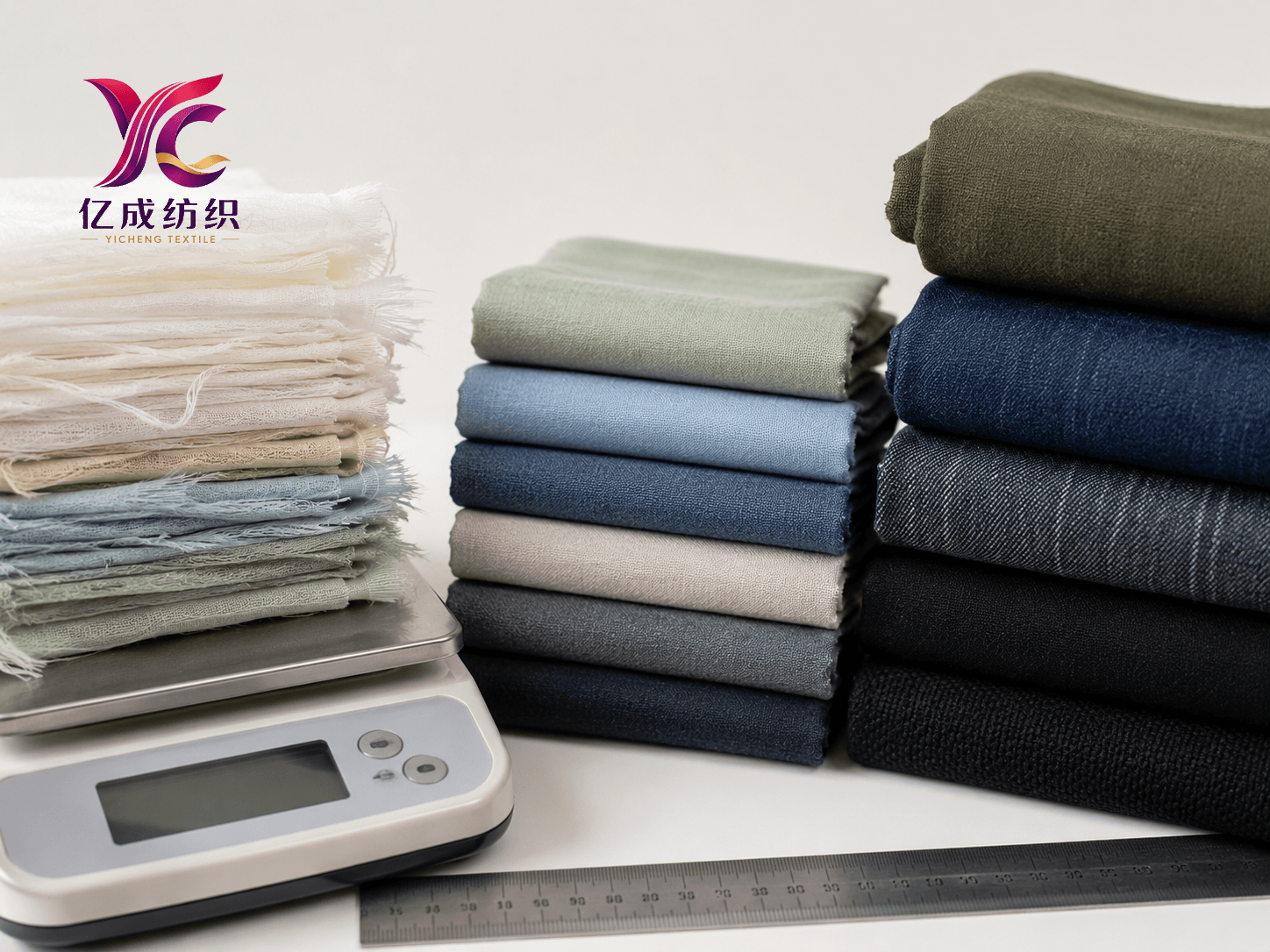
What is Fabric GSM?
GSM stands for grams per square meter, meaning the weight of fabric per square meter.
Simply put, GSM helps buyers determine whether a fabric is light or heavy.
For example:
- 120–160 GSM usually belongs to lightweight fabrics.
- 160–220 GSM is commonly used for T-shirts and casual wear.
- 220–280 GSM is suitable for heavier clothing, uniforms, and workwear.
- Above 280 GSM can be used for heavy garments, outerwear, bags, or specialty products.
GSM is important because it affects fabric hand feel, appearance, durability, price, and final garment quality.
What is Fabric Width?
Fabric width refers to the usable width of fabric from one selvedge to the other.
Common fabric widths include:
- 150 cm
- 160 cm
- 170 cm
- 180 cm
- 58/59 inches
- 60 inches
- Tubular width for some knits
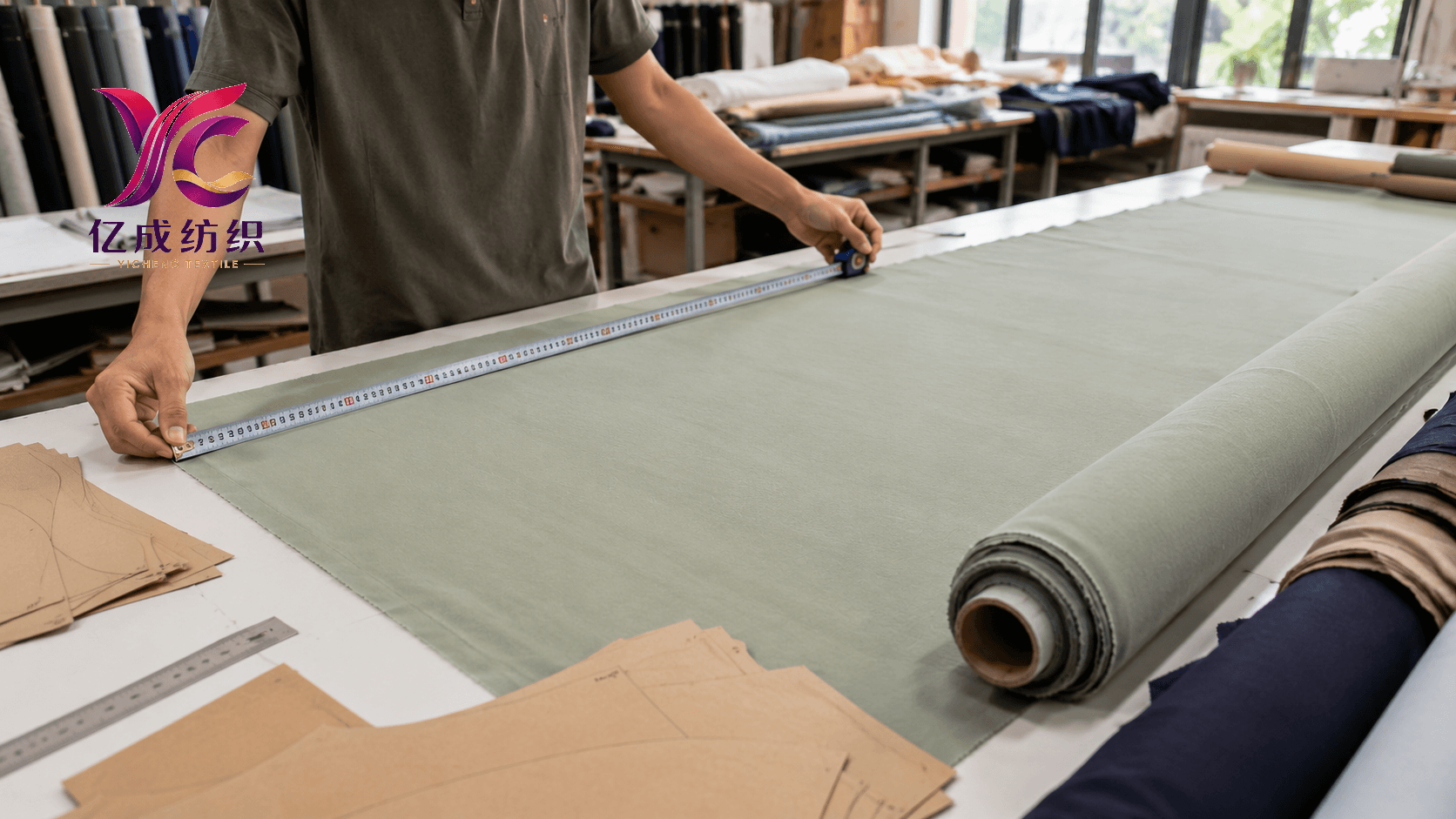
Width is important because it affects fabric consumption during cutting. A suitable width can reduce cutting waste, while an unsuitable width may increase fabric consumption.
For garment factories, width is not a small parameter; it directly affects the cost of the entire order.
Why Do Buyers Customize GSM?
When stock fabrics do not meet the requirements of the target product, buyers may need to customize GSM.
Common reasons include:
- Fabric feels too thin
- Fabric feels too thick
- Garment needs better structure
- Buyer wants a more premium hand feel
- Target price requires adjusting weight
- Customer specifies GSM requirements
- Need to match existing samples
For example, a buyer needs 180 GSM cotton single jersey for T-shirts, but stock only has 160 GSM or 200 GSM; then customizing GSM may be considered.
Why Do Buyers Customize Width?
Different garment factories have different cutting requirements, so buyers sometimes customize width.
Common reasons include:
- Pattern layout requires a specific width
- Wider fabric can reduce waste
- Need to match previous bulk production
- Fabric used for special garments or home textiles
- Customer specifies width
- Factory wants to control fabric consumption
For mass garment production, even a slight difference in fabric consumption can affect total cost.
Therefore, before placing an order, buyers should confirm the required width with the production team.
!
Stock GSM vs. Custom GSM
Stock GSM refers to fabric weights already available from suppliers or in the market.
Stock GSM usually has lower MOQ and faster delivery.
Suitable for:
- Small orders
- Sample orders
- Trial production
- Rush orders
- Flexible new style development
Custom GSM means fabric needs to be reproduced according to the buyer's specified weight.
Custom GSM typically requires higher MOQ and longer lead time because the supplier may need to adjust yarn, knitting, weaving, or finishing.
For many buyers, before choosing custom production, it's advisable to ask the supplier if they have stock fabric with a close GSM.
Stock Width vs. Custom Width
Stock width is a standard width already available from the market or supplier.
It is usually faster and more flexible.
Custom width may require different production settings or machine adjustments, thus potentially increasing MOQ, cost, and lead time.
Before requesting custom width, buyers should confirm:
- Is a close width acceptable?
- Can the pattern be adjusted?
- Does a wider width actually reduce waste?
- Will custom width increase MOQ?
- Is the fabric knitted or woven?
- Will finishing affect the final width?
Some fabrics may have slight width changes after dyeing and finishing, so buyers need to confirm the tolerance range with the supplier in advance.
Why Do Custom GSM and Width Affect MOQ?
Custom GSM and width usually affect MOQ because fabric production requires a minimum batch size.
The supplier may need to arrange:
- Yarn selection
- Knitting or weaving production
- Machine adjustment
- Dyeing
- Finishing
- Stentering
- Quality inspection
- Sample approval
If the order quantity is too small, the production cost per meter of fabric will be high.
Therefore, the MOQ for custom GSM or custom width is usually higher than for stock fabric.
Production Tolerance is Normal
Fabric production typically has reasonable tolerances. Buyers need to understand that GSM and width may not always exactly equal the target number.
For example, a buyer requests 180 GSM, but the bulk may have an acceptable range depending on fabric type and production standards.
Width may also have slight tolerances after dyeing, washing, and finishing.
Before placing an order, buyers should confirm:
- Target GSM
- Acceptable GSM tolerance
- Target width
- Acceptable width tolerance
- Test method
- Open width or tubular
Clarifying these details in advance can reduce disputes after bulk delivery.
Differences Between Knitted and Woven Fabrics
When customizing GSM and width, the situation differs between knitted and woven fabrics.
Knitted Fabrics
Knitted fabrics are affected by yarn, loop structure, dyeing, and finishing; GSM and width may change after processing.
Common knitted fabrics include:
- Cotton single jersey
- Polyester single jersey
- Rib fabric
- Double jersey
- Mesh fabric
- Stretch knit
For knitted fabrics, buyers need to pay attention to stretch, shrinkage, GSM, width, and hand feel after finishing.
Woven Fabrics
Woven fabrics are generally more stable than knits, but width and GSM are still affected by yarn, weave structure, and finishing.
Common woven fabrics include:
- Poplin
- Twill
- Denim
- Oxford
- Canvas
- Satin
For woven fabrics, buyers need to pay attention to width stability, shrinkage, colorfastness, and fabric surface structure.
How Does GSM Affect Cost?
GSM affects cost because higher weight usually means more raw material consumption.
Generally:
- Higher GSM typically uses more yarn or raw materials.
- Higher GSM may lead to higher fabric cost.
- Higher GSM may also increase shipping weight.
- Lower GSM can reduce cost, but may result in a thinner hand feel.
- Suitable GSM should be chosen based on end use.
Buyers should not choose GSM solely based on price. Too thin fabric may not meet customer requirements, while too thick fabric may add unnecessary cost.
How Does Width Affect Cutting Cost?
Width affects cutting efficiency.
If the width is suitable for pattern layout, the garment factory can reduce waste. If the width is unsuitable, fabric consumption may increase.
For example, two fabrics have the same price per meter but different widths; the final garment cost may differ.
Garment factories should calculate fabric consumption based on actual width, not just the unit price per meter.
Sample Approval Before Bulk
Before customizing GSM or width, it is very important to approve samples.
Buyers should check:
- GSM
- Width
- Hand feel
- Thickness
- Stretch
- Shrinkage
- Color
- Surface texture
- Suitability for cutting
- Washing performance
If possible, buyers should make a garment sample to confirm the fabric's performance in actual production.
What Information Should Buyers Provide?
To get accurate quotes, buyers should provide clear parameters.
Recommended information:
- Fabric type
- Material or composition
- Target GSM
- Target width
- Color
- Quantity
- End use
- Reference swatch
- Custom requirements
- Tolerance requirements
- Delivery country
- Whether samples are needed
For example:
"I need cotton single jersey, 180 GSM, 180 cm open width, black, for T-shirt production, quantity 1000 meters."
This inquiry is easier to quote than just asking "Can you make cotton fabric?"
Common Mistakes
Buyers should avoid these mistakes:
- Not confirming GSM before ordering
- Not confirming fabric width
- Not considering width when comparing prices
- Requesting custom GSM for very small quantities
- Ignoring production tolerance
- Not approving samples
- Not confirming open width or tubular
- Assuming all fabrics can be made in any width
- Not testing shrinkage
- Not calculating cutting fabric consumption
The clearer the parameters, the fewer problems in sourcing and production.
Summary
Customizing GSM and width is an important part of fabric sourcing. It helps buyers make the fabric better match the final garment, but also affects MOQ, price, lead time, production tolerance, and quality control.
For garment factories and fabric wholesale buyers, the best choice may not always be full customization. Sometimes choosing stock GSM or stock width that is close to the requirement can reduce MOQ and save time.
If you need custom GSM or custom width for cotton, polyester, denim, knitted, or woven fabrics, you can send your requirements directly. We can recommend suitable fabric solutions for garment factories in Vietnam, Thailand, and Southeast Asia.
Frequently Asked Questions
What does fabric GSM mean?
GSM is the weight of fabric per square meter, used to determine if a fabric is light or heavy.
Can fabric GSM be customized?
Yes. Many fabrics can have GSM customized based on fabric type, MOQ, and production conditions.
Can fabric width be customized?
Yes, but custom width may require higher MOQ, machine adjustments, and longer lead time.
Why does custom GSM affect price?
Higher GSM usually requires more yarn or raw materials, thus may increase fabric cost and shipping weight.
Is sample approval necessary before customization?
Yes. Buyers should approve samples before bulk production, checking GSM, width, hand feel, shrinkage, and quality.


