
What is Fabric Color Fastness? A Guide for Garment Factory Procurement and Quality Control
Published Mar 15, 2024
Introduction to what fabric color fastness means, and why garment factories and fabric buyers need to pay attention to wash fastness, rubbing fastness, perspiration fastness, and light fastness.
What is Fabric Color Fastness? A Guide for Garment Factory Procurement and Quality Control
Color fastness is a very important quality indicator in fabric procurement and garment production. A fabric may look good initially, but if it fades or bleeds after washing, or stains other garments when rubbed, it can cause serious quality problems.
For garment factories and wholesale fabric buyers, checking fabric color fastness before mass production can reduce customer complaints, rejection of bulk goods, and production risks.
This article explains what fabric color fastness means, why it matters, common types of color fastness tests, and what buyers should confirm before bulk purchasing.
What is Fabric Color Fastness?
Fabric color fastness refers to the ability of a fabric's color to remain stable under conditions such as use, washing, rubbing, perspiration, and light exposure.
If a fabric has good color fastness, the color does not fade easily and does not transfer to other fabrics easily.
If a fabric has poor color fastness, these problems can occur:
- Fading
- Bleeding
- Staining other garments
- Color transfer after rubbing
- Uneven color after washing
- Customer complaints
- Rejection of bulk goods
Color fastness is especially important for dark colors, bright colors, uniforms, sportswear, denim, children's wear, and export orders.
Why Should Garment Factories Care About Color Fastness?
Garment factories need color-stable fabrics because garments are repeatedly worn, washed, and used.
Poor color fastness can affect:
- Garment appearance
- Customer satisfaction
- Brand reputation
- Washing performance
- Export quality inspection
- Return rate
- Production cost
For example, if a dark blue T-shirt stains white garments during washing, the buyer may reject the entire order. If a black uniform visibly fades after a few washes, customers will complain quickly.
Therefore, color fastness should be confirmed before bulk cutting, not after garments are made.
Common Types of Color Fastness
Different products require attention to different types of color fastness. Common ones include wash fastness, rubbing fastness, perspiration fastness, and light fastness.
Wash Fastness
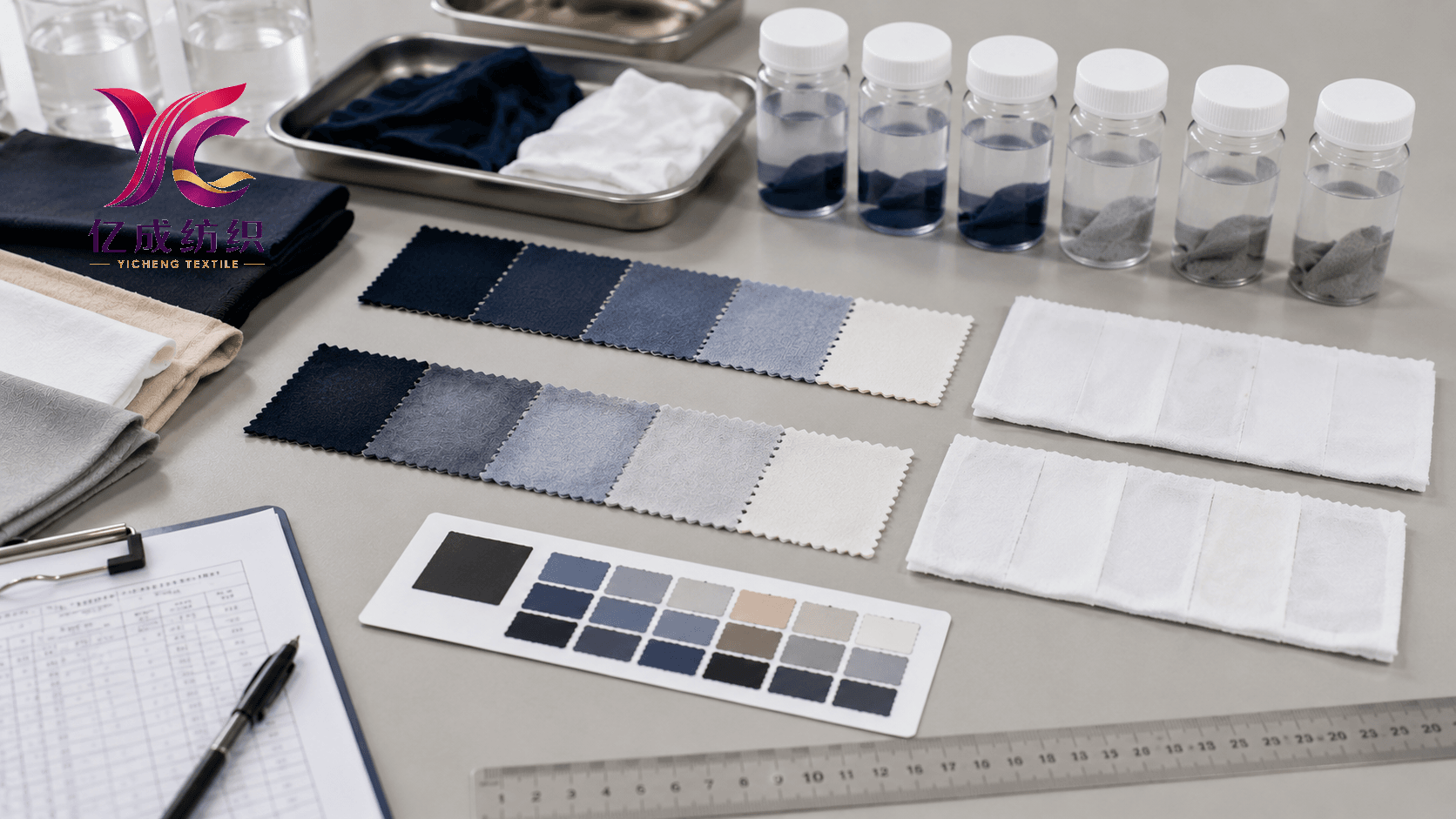
Wash fastness indicates whether the fabric's color remains stable after washing.
Poor wash fastness can cause:
- Fading
- Bleeding
- Staining other garments
- Uneven color after washing
T-shirts, uniforms, baby and children's wear, underwear, sportswear, cotton fabrics, polyester fabrics, and dark-colored fabrics all need attention to wash fastness.
For garments that are frequently washed, wash fastness is especially important.
!
Rubbing Fastness
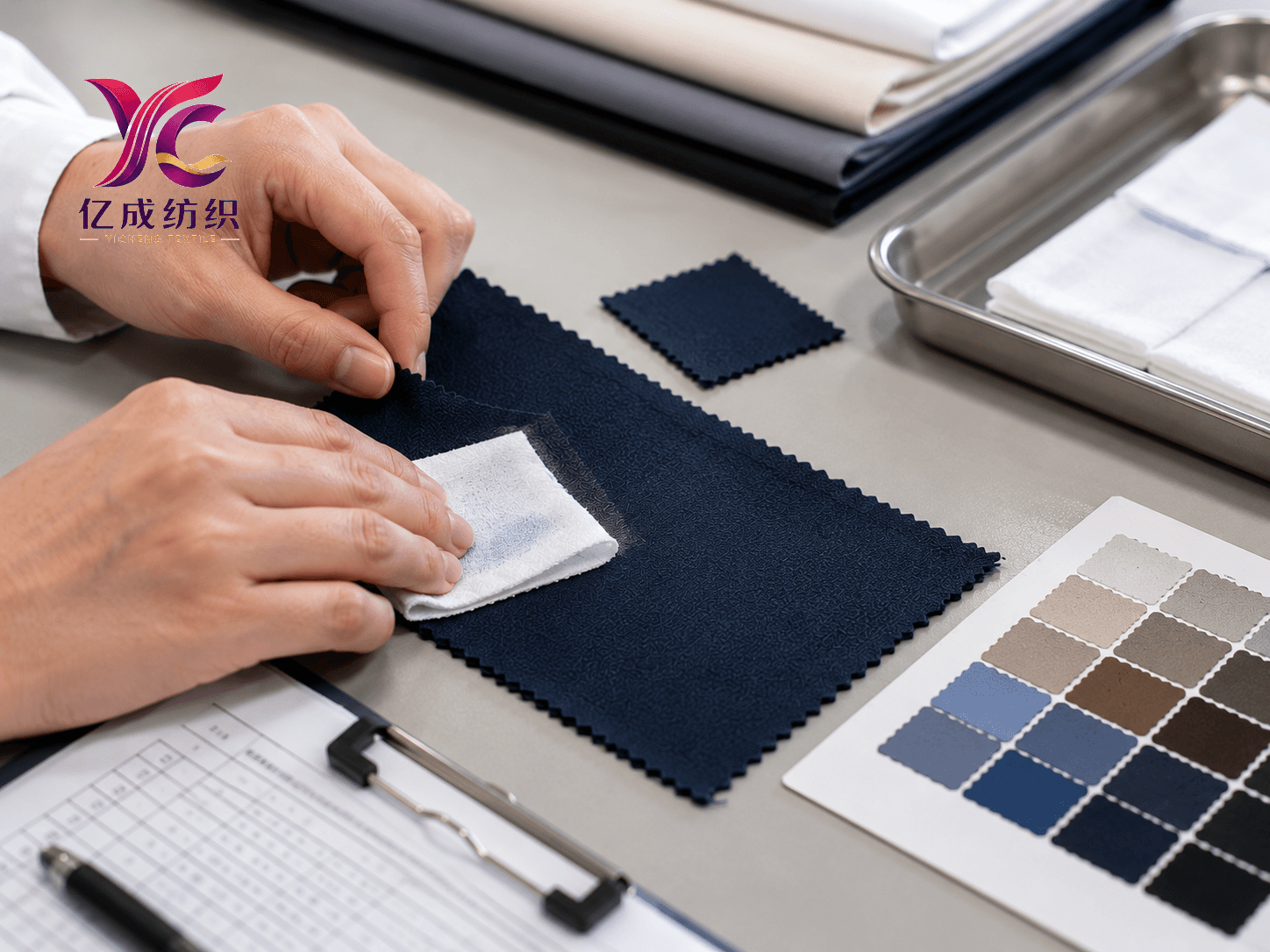
Rubbing fastness indicates whether the fabric's color transfers when rubbed.
It is usually divided into:
- Dry rubbing fastness
- Wet rubbing fastness
Wet rubbing is usually more challenging than dry rubbing.
Rubbing fastness is important for denim, dark fabrics, printed fabrics, uniforms, trousers, bags, and sportswear.
If rubbing fastness is poor, color may transfer to skin, lining, bags, seats, or other garments.
Perspiration Fastness
Perspiration fastness indicates whether the fabric's color is stable when exposed to perspiration (sweat).
This is important for garments worn next to the skin, such as:
- T-shirts
- Sportswear
- Underwear
- School uniforms
- Workwear
- Baby and children's wear
- Summer clothing
If perspiration fastness is poor, sweat may cause fading or staining.
For hot markets like Southeast Asia, perspiration fastness is especially important.
Light Fastness
Light fastness indicates whether the fabric's color fades easily under sunlight or artificial light.
This is relatively important for:
- Outdoor garments
- Sportswear
- Workwear
- Bags
- Curtains
- Home textiles
- Products exposed to sunlight for long periods
Some bright colors fade more easily in strong light. If the product will be used outdoors, buyers should confirm light fastness.
Which Fabrics Need More Attention?
All fabrics should be checked for color fastness, but some require special attention.
Dark-Colored Fabrics
Dark colors such as black, navy, dark blue, dark red, and dark green need key focus on color fastness.
If dyeing control is not good, dark fabrics are more prone to bleeding or staining.
Bright-Colored Fabrics
Bright red, fluorescent colors, royal blue, and strong fashion colors also need careful testing.
Depending on dyeing and finishing, these colors may be more prone to fading or transfer.
Denim
Denim is closely related to washing and rubbing. Indigo denim also has special fading characteristics.
Before denim pants production, buyers should check washing effects, dry rubbing, wet rubbing, and shrinkage.
Sportswear Fabrics
Sportswear is often exposed to perspiration, washing, and rubbing.
Polyester sports fabrics, mesh fabrics, and spandex stretch fabrics need attention to perspiration fastness, wash fastness, and rubbing fastness.
Uniform Fabrics
Uniforms are washed repeatedly and need to maintain a consistent appearance.
School uniforms, workwear, hotel uniforms, and corporate uniforms should have good wash and rubbing fastness.
Printed Fabrics
Printed fabrics need checking of print fastness, pattern clarity, and color transfer risk.
Buyers need to confirm that prints do not easily fade, crack, or peel after washing.
How to Check Color Fastness Before Bulk Production?
Before bulk production, buyers can confirm color fastness through samples or test reports.
Practical steps include:
- Confirm lab dip or approval sample.
- Request sample yardage from the supplier.
- Perform washing test on the sample fabric.
- Check for fading.
- Check for staining on white or light-colored fabric.
- Perform dry and wet rubbing tests.
- Compare with the approved sample.
- If required by the customer, arrange for a formal test report.
For export orders or brand orders, buyers may need official laboratory test reports.
For regular wholesale orders, basic testing can also help buyers reduce risk before cutting.
Approved Sample is Important
The approved sample should be kept as a color standard.
Approved samples can be:
- Lab dip
- Fabric swatch
- Bulk sample
- Customer-approved sample
- Previous order retained sample
Buyers should compare bulk fabric with the approved sample under appropriate lighting.
If obvious color difference, fading, or staining is found, it should be communicated with the supplier and resolved before cutting.
Color Difference and Color Fastness are Not the Same
Color difference and color fastness are related but not the same concept.
Color difference refers to the color not matching the approved sample, or varying in shade between different rolls.
Color fastness refers to whether the color remains stable after washing, rubbing, perspiration, or light exposure.
A fabric may have the correct color initially but poor color fastness after washing. Or it may have good color fastness but color difference between rolls.
Buyers need to check both.
!
Color Fastness Considerations for Different Fabrics
Different fabrics have different dyeing methods and different color fastness controls.
Cotton Fabrics
Cotton is often used for T-shirts, shirts, baby and children's wear, and casual wear.
Buyers need to pay attention to wash fastness, rubbing fastness, and shrinkage.
Polyester Fabrics
Polyester is often used for sportswear, uniforms, and bags.
Buyers need to pay attention to wash fastness, perspiration fastness, and color brightness.
Denim
Denim has special washing and fading effects.
Buyers need to confirm whether fading is a design feature or a quality issue.
Knitted Fabrics
Knitted fabrics are often used for T-shirts, underwear, and sportswear.
Buyers should check color fastness, shrinkage, stretch, and hand feel.
Woven Fabrics
Woven fabrics are often used for shirts, uniforms, workwear, and bags.
Buyers need to focus on color consistency, rubbing fastness, and wash fastness.
Why is Color Fastness Even More Important for the Southeast Asian Market?
For garment buyers in Vietnam, Thailand, and Southeast Asia, color fastness is especially important because the local climate is often hot and humid.
Garments may frequently encounter:
- Perspiration
- Frequent washing
- Strong sunlight
- Outdoor environment
- Humid conditions
- Daily wear rubbing
Sportswear, uniforms, T-shirts, and workwear for these markets should be carefully checked for color fastness before bulk production.
What Can Buyers Ask Suppliers?
Before placing a bulk order, buyers can ask suppliers:
- What is the expected color fastness grade for this fabric?
- Has wash fastness been tested?
- Has rubbing fastness been tested?
- Is the wet rubbing fastness acceptable?
- Has perspiration fastness been tested?
- Does this fabric require light fastness?
- Can you provide sample yardage for testing?
- Can you provide a test report if needed?
- Is this a stock color or custom dyeing?
- Can a color approval sample be kept as a standard?
These questions can help buyers reduce risk before production.
What Information Should Buyers Provide?
To help suppliers recommend more suitable fabrics, buyers should provide:
- Fabric type
- Material or composition
- GSM (weight)
- Width
- Color
- Quantity
- End use
- Washing requirements
- Color fastness requirements
- Whether samples are needed
- Destination country
- If there is a customer standard, it can also be provided
For example:
"I need polyester mesh fabric, 160 GSM, navy blue, for sportswear. The fabric needs good wash fastness and perspiration fastness."
This inquiry is clearer, and the supplier can more easily recommend suitable fabric.
Common Mistakes
Buyers should avoid these mistakes:
- Judging color only from pictures
- Not requesting physical samples
- Not performing washing tests
- Ignoring rubbing fastness
- Not key-checking dark-colored fabrics
- Not checking shade variation between rolls
- Assuming all colors have the same fastness
- Not confirming color fastness before cutting
- Not keeping approved samples
- Not having a test report when the customer requires one
Color fastness problems are easier to prevent before production; handling them after garments are made is troublesome.
Summary
Fabric color fastness is a quality indicator that garment factories and wholesale fabric buyers must pay attention to. It affects washing performance, color stability, customer satisfaction, and final garment quality.
Before bulk production, buyers should check wash fastness, rubbing fastness, perspiration fastness, and light fastness when necessary, while also confirming color difference and sample standards.
If you are looking for cotton, polyester, denim, knitted, woven, or custom-dyed fabrics with stable color fastness, you can send an inquiry directly. We can recommend suitable fabric solutions for garment factories in Vietnam, Thailand, and Southeast Asia.
Frequently Asked Questions
What does fabric color fastness mean?
Fabric color fastness refers to the ability of a fabric's color to remain stable during washing, rubbing, perspiration, light exposure, and daily use.
Why is color fastness important?
Poor color fastness can cause fading, bleeding, staining, and customer complaints.
What is rubbing fastness?
Rubbing fastness indicates whether the fabric's color transfers after dry or wet rubbing.
What is wash fastness?
Wash fastness indicates whether the fabric's color remains stable after washing.
Do I need to check color fastness before bulk production?
Yes. Buyers should check color fastness before cutting and sewing to reduce production risk.


