Yicheng Textile亿成纺织

What Fabrics Are Used for Uniforms and Workwear? A Procurement Guide for Garment Factories

Published Dec 15, 2021

What Fabrics Are Used for Uniforms and Workwear? A Procurement Guide for Garment Factories

Introduces common fabrics for uniforms and workwear, including T/C, twill, poplin, oxford, etc., helping garment factories and wholesale buyers choose suitable fabrics based on durability, comfort, GSM, and application.

What Fabrics Are Used for Uniforms and Workwear? A Procurement Guide for Garment Factories

Uniforms and workwear are widely used in schools, factories, hotels, restaurants, security companies, and corporate teams. Unlike regular fashion, uniform and workwear fabrics need to balance comfort, durability, appearance, cost, and easy care.

For garment factories and fabric wholesale buyers, choosing the right fabric reduces production issues and improves customer satisfaction. This article introduces common fabrics for uniforms and workwear, including T/C, twill, poplin, oxford, and other practical fabric options.

What Characteristics Make a Good Uniform Fabric?

A good uniform fabric must withstand daily wear and repeated washing. It should not only look neat but also maintain stable performance over long-term use.

Key indicators include:

  • Durability
  • Hand feel comfort
  • Color stability
  • Shape retention
  • Easy washing
  • Appropriate GSM weight
  • Reasonable cost
  • Low shrinkage
  • Suitable width
  • Suitability for embroidery or printing

Uniform customers usually care about both appearance and long-term performance. If the fabric deforms, fades, or wrinkles easily, the finished garment will suffer.

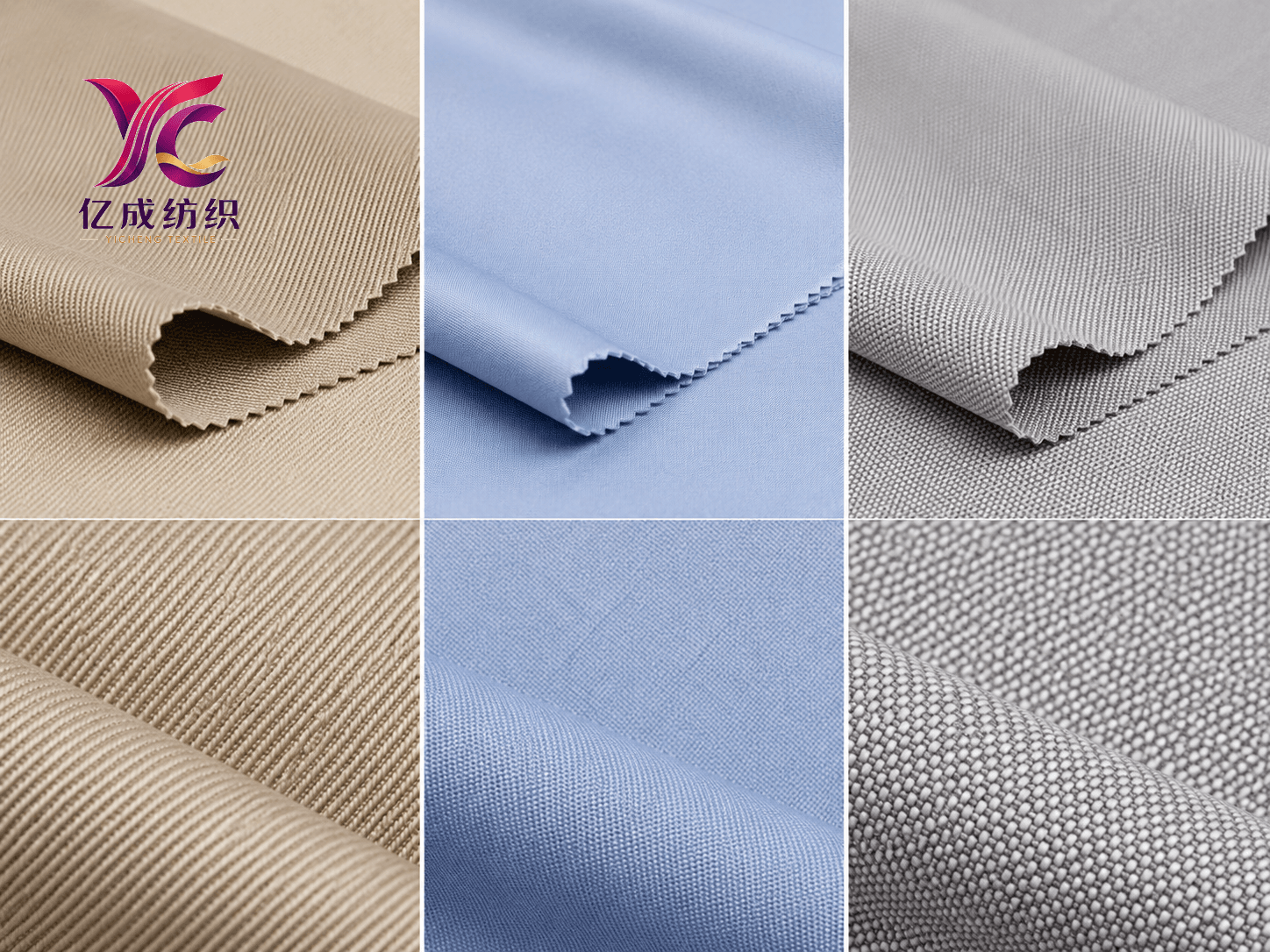
!uniform-workwear-fabric-wholesale-supplier.png

Common Fabric Types for Uniforms and Workwear

Different uniforms require different fabrics. School uniforms, factory workwear, hotel uniforms, and heavy-duty work clothes should not all use the same fabric.

T/C Fabric

T/C fabric is a very common choice for uniforms and workwear.

It combines the comfort of cotton with the durability and easy care of polyester, making it suitable for daily uniforms, factory wear, school uniforms, and corporate workwear.

Common blends include:

  • 65% polyester 35% cotton
  • 80% polyester 20% cotton
  • 50% polyester 50% cotton
  • CVC or TC blends as needed

T/C fabric is popular because it balances comfort, strength, and cost.

Twill

Twill has a diagonal weave on the surface and is generally stronger and more durable than plain weave.

It is widely used for:

  • Workwear
  • Factory uniforms
  • Pants
  • Jackets
  • Aprons
  • Security uniforms

Toll offers more stable structure and is suitable for long-term use.

Poplin

Poplin has a smooth, clean surface and is often used for shirts, school uniforms, office uniforms, and hotel uniforms.

Poplin is suitable for garments that need a neat appearance and lightweight feel.

It is not as heavy as twill, making it better for indoor uniforms or warmer climates.

Oxford

Oxford has more texture than poplin and is also stronger. It is commonly used for shirts, uniforms, bags, and some workwear products.

Polyester oxford can also be used for bags, outdoor gear, and accessories.

For uniform shirts, cotton oxford or T/C oxford provides a more durable and textured look.

Stretch Fabric

Some uniforms require better mobility, and stretch fabrics containing spandex can be used.

Stretch fabrics are suitable for:

  • Fitted uniforms
  • Hotel service staff uniforms
  • Workwear requiring movement
  • Women's uniforms
  • Pants and skirts

Stretch fabrics improve wearing comfort, but buyers need to confirm elasticity, shrinkage, and durability.

How to Choose the Right GSM Weight?

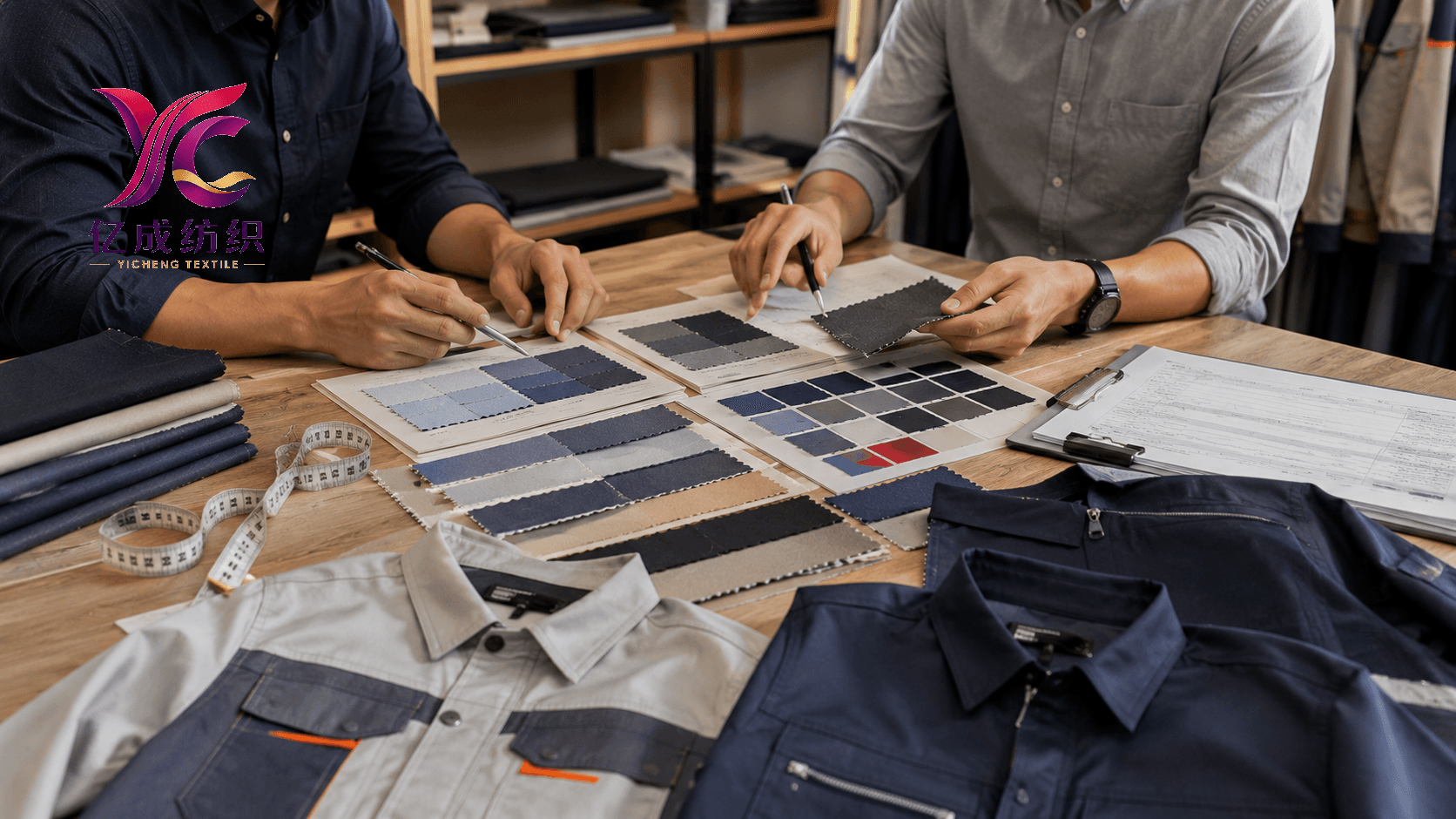
!uniform-fabric-sourcing-samples-and-specifications.png

GSM affects fabric weight, thickness, and durability.

For uniforms and workwear:

  • 120–160 GSM: suitable for lightweight shirts and indoor uniforms.
  • 160–220 GSM: suitable for school uniforms, office uniforms, and regular shirts.
  • 220–280 GSM: suitable for workwear, pants, jackets, and sturdier uniforms.
  • Above 280 GSM: suitable for heavy-duty workwear, outdoor uniforms, or abrasion-resistant protective clothing.

The appropriate GSM depends on product type, climate, usage scenario, and target price.

For markets with hotter climates like Southeast Asia, buyers may prefer breathable, medium-weight fabrics. Factory workwear, however, suits sturdy twill or blended fabrics.

Balancing Comfort and Durability

Uniform fabrics must be comfortable for daily wear while withstanding repeated use and washing.

Cotton provides better natural comfort and breathability. Polyester enhances strength, wrinkle resistance, and quick drying. This is why T/C blends are common for uniforms.

For example:

  • Hotel shirts can use poplin or oxford.
  • Factory uniforms can use T/C twill.
  • School uniforms can use T/C poplin or T/C twill.
  • Heavy-duty workwear can use thick twill or canvas-like fabrics.

The best uniform fabric is not necessarily the thickest, but one that suits the work environment and wearing needs.

Colorfastness and Washing Performance

Uniforms are typically washed repeatedly, so colorfastness is critical.

Buyers need to pay attention to:

  • Washing colorfastness
  • Rubbing colorfastness
  • Shrinkage after washing
  • Wrinkle resistance
  • Pilling resistance
  • Seam strength after sewing

Dark uniforms especially require attention to colorfastness. Poor dyeing quality may cause fading or staining after washing.

It is recommended to confirm fabric samples and conduct wash tests before bulk production.

Width and Cutting Efficiency

Fabric width affects cutting efficiency and fabric consumption.

Common uniform fabric widths include:

  • 150 cm
  • 160 cm
  • 170 cm
  • 180 cm

Appropriate width helps garment factories reduce cutting waste. Buyers should confirm the required width with the production team before ordering.

For large uniform orders, even small differences in fabric consumption affect overall cost.

How to Choose Fabric for Different Uniforms?

School Uniforms

School uniforms need to be comfortable, durable, and easy to wash. T/C poplin or T/C twill are common choices.

Factory Workwear

Factory workwear requires better durability and structure. T/C twill, thick twill, or canvas-like fabrics are more suitable.

Hotel and Restaurant Uniforms

Hotel and restaurant uniforms need a neat appearance and comfortable hand feel. Poplin, oxford, and T/C are common choices.

Security Uniforms

Security uniforms usually need to be stiffer and more structured. Twill or thicker blended fabrics are more appropriate.

Corporate Uniforms

Corporate uniforms should look clean and professional. Buyers can choose poplin, oxford, or T/C based on style.

What Information Should Be Confirmed Before Purchasing?

Before placing a wholesale uniform fabric order, buyers should confirm:

  • Fabric type
  • Material and composition
  • GSM weight
  • Width
  • Color
  • Quantity
  • Application
  • Shrinkage requirements
  • Colorfastness requirements
  • Printing or embroidery requirements
  • Whether samples are needed
  • Destination country

If the buyer already has a uniform sample, they can send it to the supplier for fabric matching.

Can Uniform Fabrics Be Customized?

Yes. Uniform and workwear fabrics can usually be customized according to buyer needs.

Common customization options include:

  • GSM weight
  • Width
  • Color
  • Composition
  • Finishing
  • Waterproofing
  • Antistatic finishing
  • Stretch
  • Hand feel
  • Printing or dyeing

Whether customization is possible typically depends on MOQ, fabric type, and production schedule.

Conclusion

Uniform and workwear fabrics need to be practical, comfortable, durable, and cost-effective. Buyers should not choose fabric based on price alone; GSM, composition, colorfastness, shrinkage, width, and end use are all important.

For garment factories, the right fabric improves production efficiency and finished garment quality.

If you are looking for T/C, twill, poplin, oxford, or workwear fabrics, please send an inquiry directly. We can recommend suitable uniform and workwear fabric solutions for garment factories in Vietnam, Thailand, and Southeast Asia.

Frequently Asked Questions

What fabric is commonly used for uniforms?

T/C fabric is commonly used for uniforms because it balances comfort, durability, and easy care.

What fabric is suitable for workwear?

Twill, T/C twill, and heavier woven fabrics are commonly used for workwear.

What GSM is typical for uniform fabrics?

Common uniform fabrics range from 160–280 GSM, depending on whether it is for shirts, pants, jackets, or workwear.

Can uniform fabrics be customized?

Yes. Uniform fabrics can typically be customized for color, GSM, width, composition, and finishing based on MOQ.

Should samples be confirmed before bulk production?

Yes, it is recommended to confirm samples. Samples help buyers evaluate hand feel, color, weight, shrinkage, and washing performance.

Related Articles

Need fabric sourcing help?

Tell us what you're producing and we'll recommend the right fabric — with wholesale pricing and free samples.